

ELROB 2026: Swiss Teams Compete in an International Performance Challenge
From June 16 to 19, 2026, more than 20 international teams from universities, industry, and research institutions will compete at the European Land Robot Trial (ELROB). The event is considered one of the most demanding performance competitions for mobile robot systems in Europe. Switzerland is also represented: The teams BeBot, ReFORZED, and ROSAS will put their developments to the test under realistic conditions. In short interviews, the participants discuss their motivation for participating and the unique features of their systems.
Interviews conducted by Leandra Kolb, Staff, Science and Technology
Team BeBot
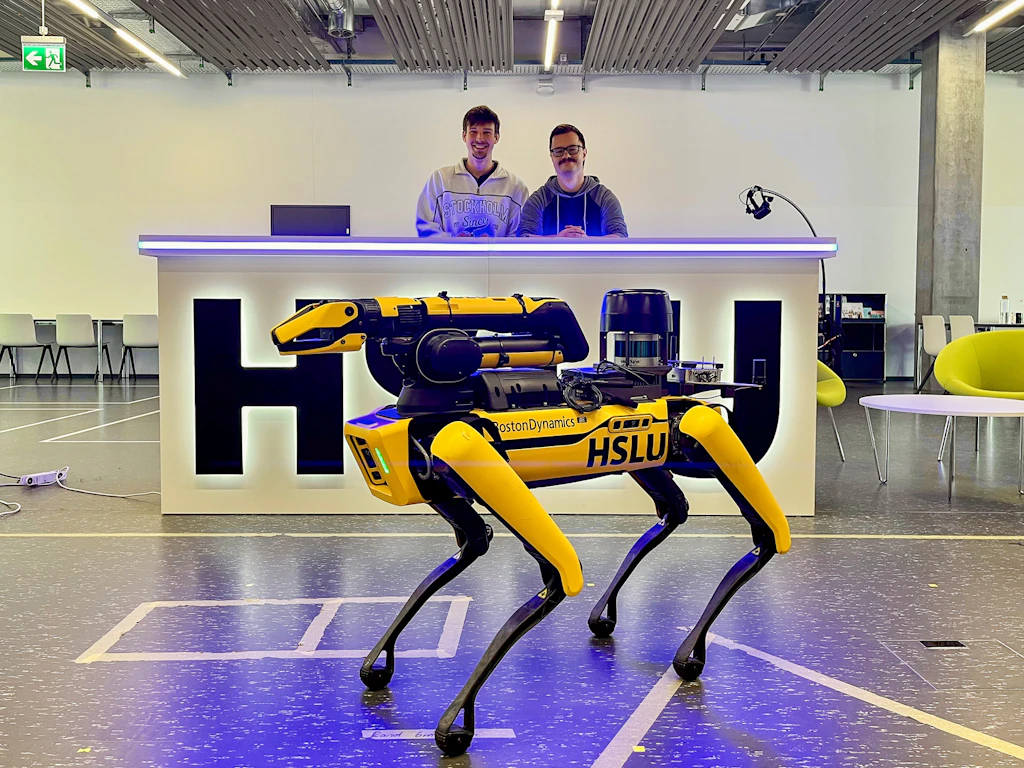
Institution: Lucerne University of Applied Sciences and Arts
Number of Team Members: 4–5
Technological Focus: Computer Science
Team Founded: January 2026
Discipline: Reconnoitring of a non-urban environment
Who are you and what do you do ?
We are students at the Lucerne University of Applied Sciences and Arts and are participating in ELROB as part of our bachelor’s thesis using a Boston Dynamics Spot robot. Our focus is on the autonomous exploration of rough terrain with the four-legged walking robot.
Which scenario are you participating in with your system, and why?
The objectives of our bachelor’s thesis align perfectly with the “Reconnaissance of a non-urban environment” scenario. The central objectives are to investigate the autonomous navigation of the Spot robot in unstructured outdoor environments, to implement reliable mapping and environmental recognition, and to evaluate the system’s performance under real-world conditions. The “Reconnaissance of a non-urban environment” scenario is particularly well-suited for this purpose, as it directly addresses these objectives while also taking into account the physical characteristics and limitations of the Spot robot.
What are you hoping to gain from participating in the event?
We hope to gain insight into the current state of the technology and are looking forward to learning about the innovative approaches of other teams. We are also interested in directly comparing our final product with the work of established teams. And, of course, we look forward to making new connections.
What sets you apart from other teams / what makes your team unique?
As a young university team, we work in an agile and dynamic way. This allows us to respond quickly to new requirements and bring fresh perspectives to the table. At the same time, we are aware that a lack of experience can also present organizational challenges, but we view this as an additional opportunity to learn.
Team ReFORZED
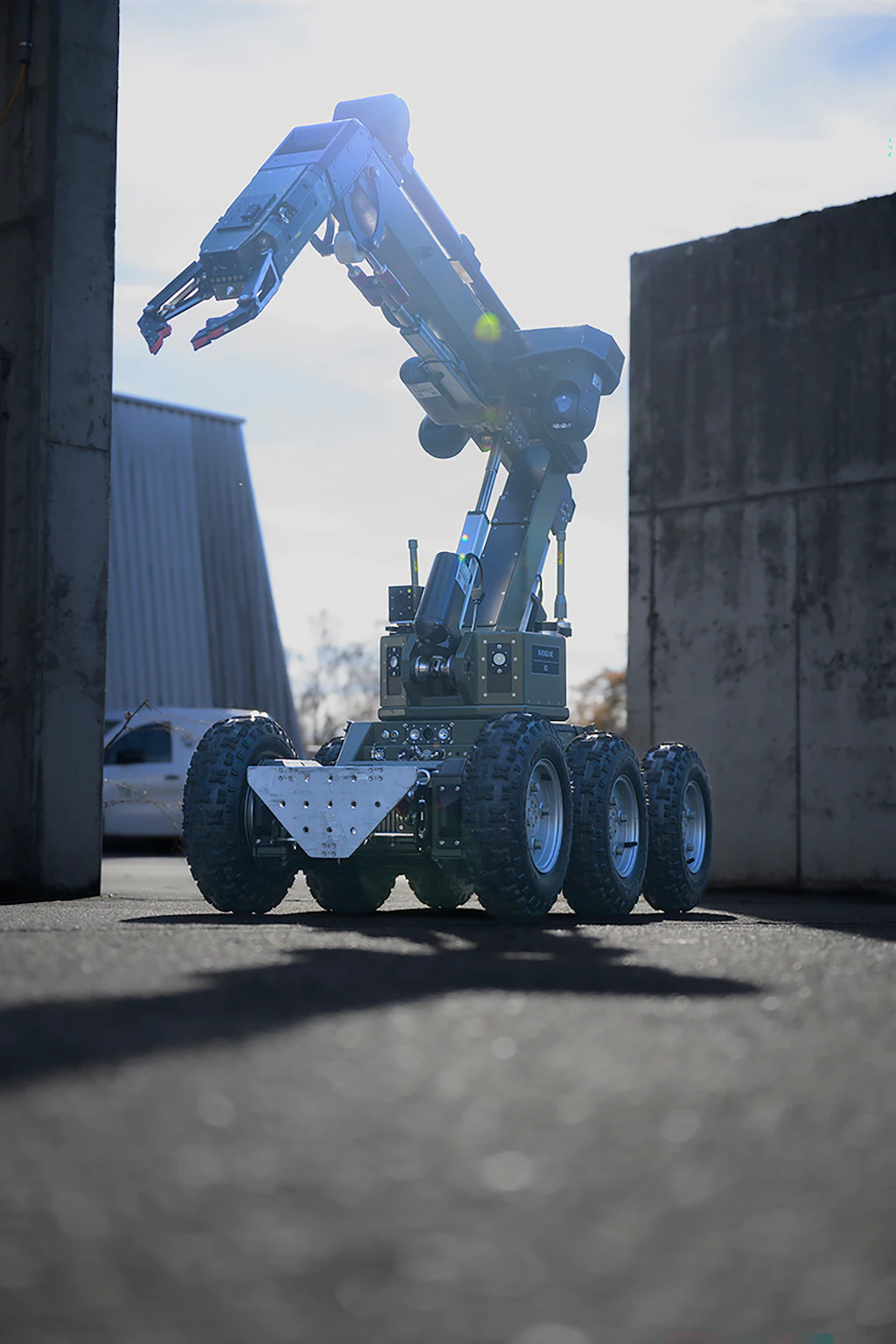
Institution/Company: Reamda Ltd. & Zurich Forensic Science Institute
Number of team members: 4
Technological focus: Teleoperation (remote-controlled manipulators)
Since when has the team existed: In this composition for approximately 6 months
Disciplines: ERW Recon
Who are you and what do you do?
We are a mixed team consisting of the robot manufacturer (Reamda Ltd.) and the end users from the Zurich Forensic Science Institute, who use the system on a daily basis. All team members are involved in the development and maintenance of the systems.
In which scenario are you participating with your system and why?
We registered for the ERW Recon scenario because it best matches the capabilities of our robots. It will also be exciting to see how others solve the tasks and to identify strengths and weaknesses in comparison to our deployed robots. Ultimately, ELROB aims to enable all participants to benefit from each other technologically and to further develop their systems.
What do you expect from participating in the event?
It is important for us to push the different systems to their limits during the event and to test them under the most demanding conditions. It is no coincidence that this event is considered the most challenging benchmark in Europe for ground robots.
What sets you apart from other teams / what makes your team unique?
As users, we have in-depth insight into the robot technology and maintain excellent collaboration with the manufacturer. This is unique.
Team ROSAS
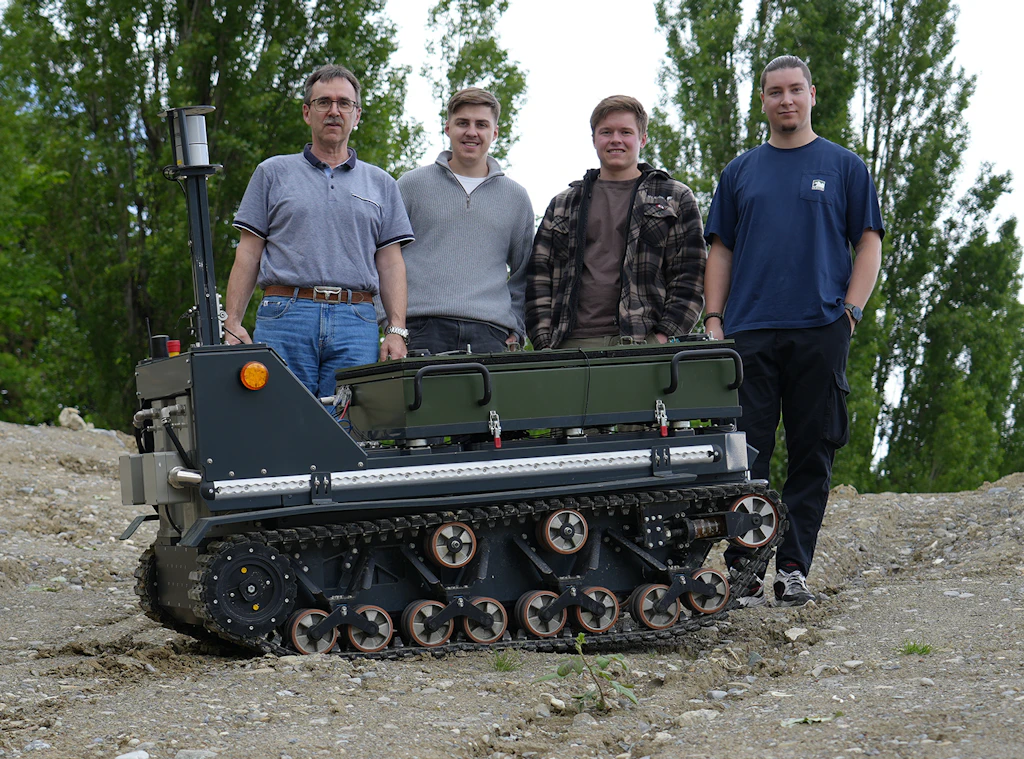
Institution: HEIA-FR
Number of team members: 4
Technological focus: Automated Mobility, Teleoperation, ROS, Embedded Systems
Year the team was founded: 2025
Discipline: Mule
Who are you and what do you do?
My name is Roland Scherwey, full professor at the Institute for Safe and Intelligent Systems (iSIS) and its ROSAS Competence Center at the School of Engineering and Architecture Fribourg. We work on autonomous and teleoperated mobile robot systems in the field of safe and robust automation. The focus is on Robot Operating Systems, so-called ROS systems, for navigation, sensor fusion, teach-and-repeat, person-following, and teleoperation under real outdoor conditions. Our work builds on research projects in remote operation, cybersecurity, and automated mobility in Switzerland. Additionally, our work in model-based and systems engineering allows us to emphasize the systems approach.
What are the strengths of your system?
Our system is based on a modular ROS architecture and can be relatively easily adapted to different vehicle platforms. By combining LiDAR (light-based distance measurement and range detection), stereo cameras, the Global Navigation Satellite System (GNSS), an IMU (inertial measurement unit), and teleoperation, the vehicle can navigate reliably even under difficult conditions. In addition, we benefit from experience gained from projects involving remote operation systems, operational design specifications, safety requirements, and cybersecurity for automated vehicles in Switzerland.
What do you hope to gain from participating in the event?
We want to gain practical experience under realistic operational conditions and compare our system with those of other international teams. At the same time, ELROB offers an interesting platform for networking and potentially establishing new partnerships.
What sets you apart from other teams / what makes your team unique?
Our team closely integrates teaching, research, and practical development. It consists of bachelor’s and master’s students as well as staff members who simultaneously work on research projects related to autonomous mobility, teleoperation, and safe automated systems. This allows us to integrate the latest research findings from projects with partners such as RUAG directly into the SwissMoves research platform, apply them to practical systems, and test them on real vehicles.
Further information
- ELROB 2026
- European Land Robot Trial (ELROB) – Robotics for security-relevant operations
- ELROB 2026: A Tool for Better Understanding Robotic Systems – An Interview with Dr. Markus Höpflinger and Joseph Boucher
- “ELROB is undoubtedly the hub of unmanned military land robotics in Europe” – Interview with Dr. Frank Schneider
- ELROB - The European Land-Robot Trial | ELROB.org