

“ELROB is undoubtedly the hub of unmanned military land robotics in Europe” – Interview with Dr. Frank Schneider
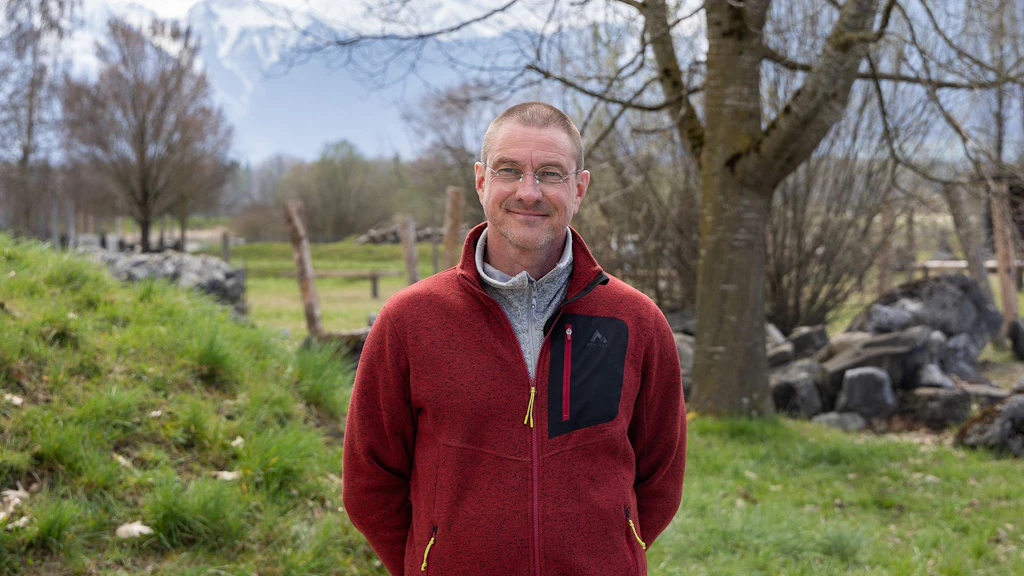
Robotic systems can keep emergency responders out of harm’s way, reduce their workload, and open up new operational possibilities. For innovations from research and development to be put into practice, they must be tested under realistic conditions. ELROB serves precisely this purpose. In June 2026, armasuisse Science and Technology will host the four-day event. In this interview, founder Dr. Frank Schneider of the Fraunhofer Institute FKIE in Germany discusses the origins, current focus areas, and future of ELROB.
Interview conducted by Leandra Kolb, Staff, Science and Technology
In brief
ELROB aims to advance the development of unmanned ground vehicles for military use. ELROB brings together researchers, industry representatives, and users from the defense and security sectors, creating a European platform for exchange, testing, and further development in robotics. ELROB is the most established event of its kind in Europe.
Dear Dr. Schneider, you launched ELROB in 2006. What was the original vision and motivation behind the founding of ELROB, and how have these evolved over the past few years?
ELROB originated from a NATO working group I founded that focused on the further development of unmanned systems. At the time, we presented the results to the the German Army Command Staff, along with a recommendation to launch a corresponding demonstration event. That was the beginning of the European Land Robot Trial ELROB.
ELROB follows an iterative-evolutionary approach. Through close contact with the end-users and continuous monitoring of the field, ELROB’s scenarios are continually adapted to current requirements.
How has ELROB changed over the past 20 years, both in terms of content and technology?
ELROB is undergoing a continuous process of adaptation to current requirements. Technically, this means that we are now seeing more commercially available vehicles in the mix. On the software side, however, we are still quite a ways away from a comprehensive solution. Consequently, the focus in the scenarios is no longer so strongly on testing platforms, but rather on the autonomous or automated capabilities of the systems.
Have systems tested as part of ELROB already been procured by civilian or military authorities?
Although the number of manufacturers of unmanned ground systems worldwide is limited, we naturally do not always have detailed knowledge of which specific system has been procured in another country. In general, it can be said that the vast majority of armies have not yet widely adopted unmanned ground systems. This is likely to change due to current developments.
From a technological perspective, where do you see the specific added value of cross-border cooperation?
From a research and technological perspective, cooperation is always a win-win. Only when the needs of the end-users are taken into account across the board can a system be created that will also succeed in multinational operations such as those of NATO, the UN, or the EU.
From June 15–19, 2026, researchers, industry representatives, and end-users will come together face-to-face. In your view, why is this direct exchange crucial for technological progress?
Research and technology thrive on exchange. ELROB is not just a run-of-the-mill trade show, but an event where researchers, developers, industry representatives, and end-users come together for an intensive dialogue. Here, developments are presented in their early stages, employment contracts are signed, development contracts are agreed upon, and new directions in research and technology are initiated. ELROB is undoubtedly the nucleus of unmanned military land robotics in Europe.
ELROB is held alternately in Germany, Austria, and Switzerland. What advantages does Switzerland offer as a host country that Germany or Austria do not?
Switzerland boasts a broad range of research and technology in the field of unmanned systems, making it a strong partner within the tri-national DACH network.
Which scenario from recent years stands out most in your memory?
The focus does indeed shift from one scenario to another. While the Transport/Convoy application received a great deal of attention in recent years, it was followed by the detection of chemical, biological, radiological, and nuclear (CBRNE) threats. This year, it is the MULE scenario.
Looking ahead: What role will ELROB play in five or ten years?
ELROB is constantly evolving as it continuously adapts to the current needs of its customers. At the same time, current developments are creating entirely new opportunities and challenges. As always, ELROB will address these and adapt accordingly to meet these new circumstances.
Looking at this year’s event: Where do you see the most lasting impacts of the event?
In addition to showcasing the current state of the art, one of the most important impacts is bringing together academic stakeholders, SMEs, industry, and end-users. This unique setting ensures an intensive, unfiltered, and direct exchange among all participants.
Finally: What are you personally most looking forward to at this year’s festival in Thun, even outside the official program?
The Panorama.