

Centre Energy for Defence and Security CEDS
The competence centre Energy Centre for Defence and Security (CEDS) of the Federal Department of Defence, Civil Protection and Sport (DDPS) is the competent contact partner for the Swiss Armed Forces and other offices in matters of energy supply and technology in the security environment.
About us
As part of the competence sector Science and Technology (S+T), the ECDS focuses on innovation and the transfer of new technologies to the military and security-relevant environment. In addition, it processes practice-oriented research topics together with research partners.
The Centre is currently processing four priority areas of focus. These are derived from overarching specifications including the Federal Council’s armament policy (in German), basic principles for developing personal skills of the Armed Forces, as well as national political requirements such as the 2050 Energy Strategy and the Federal Act on Climate Protection Goals, Innovation and Strengthening Energy Security.
Fields of action and goals
Ensuring autonomous capability of areas
The CEDS enables partners such as the Armed Forces to strengthen the autonomous capability of their areas in a targeted manner. It advises on the selection and implementation of technological solutions such as island grids, energy storage systems and decentralised power generation.
In research projects with academic partners, the Centre analyses the energy supply of military locations, assesses innovative technologies and creates a sound decision-making basis for resilient and robust energy systems. The knowledge gained and concepts developed can also be transferred to civilian infrastructures.
Resilient fuel supply SAF
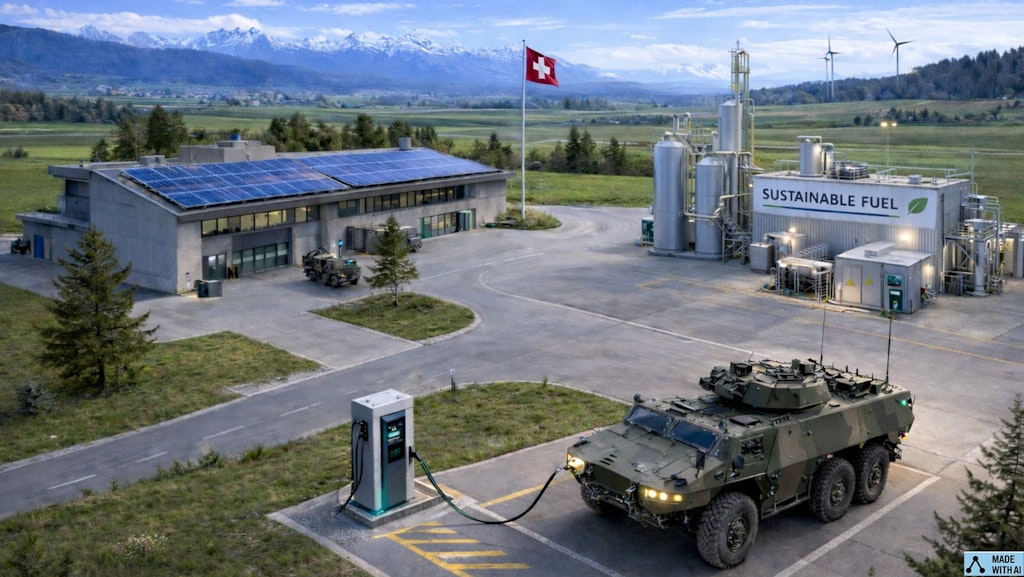
The CEDS builds specific skills to develop solutions for safeguarding and soundly assessing the fuel supply of the Armed Forces. One key approach is synthetic and biogenic fuels (also known as Sustainable Aviation Fuel, SAF), which can be produced from energy sources that are regionally available, for example through the synthesis of aviation fuel from locally generated electricity and CO2.
As such solutions can only be implemented in cooperation with industry and research, the CEDS works closely with partners. It develops the required basic technical principles to strategically align technologies and collaborations and to be able to make sound decisions.
Mobile power supply
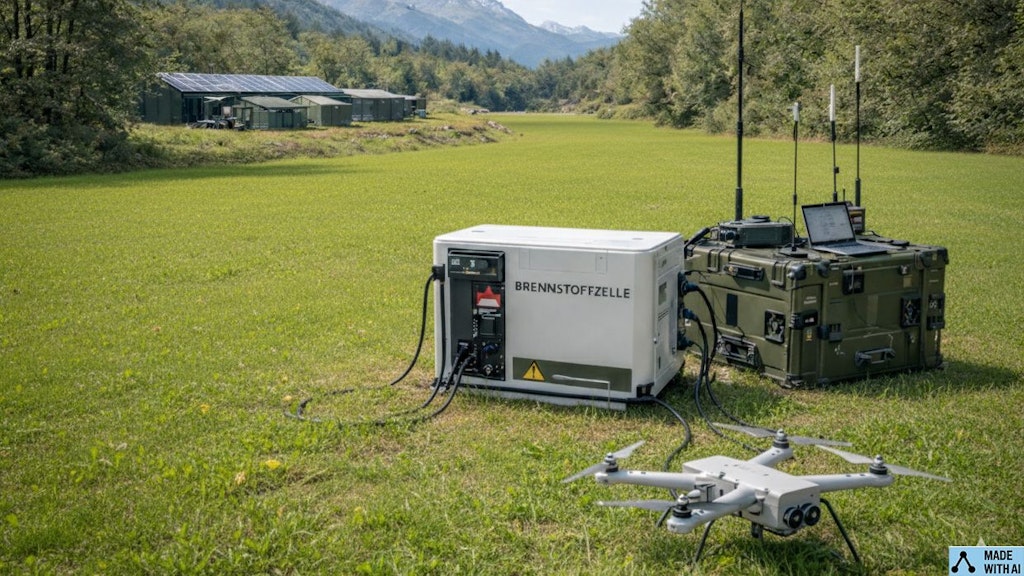
The CEDS ensures that new applications in the field can be supplied with energy at all times. Communications, sensory analysis, drones and AI require electricity that is reliably available even from far away stationary infrastructure and under difficult operating conditions.
The Centre identifies robust solutions for these and integrates them consistently in overall military planning, as well as in specific procurement procedures.
Creating an overall view of the energy system
The CEDS reveals the interactions between military and civilian energy systems and derives specific technological solutions for the Armed Forces from them. Here, it clarifies key future-related questions, such as what function hydrogen can perform in terms of mobility and as energy storage and develops tailor-made solutions.
Next steps / projects
In 2026, the CEDS will focus specifically on the topic of autonomy in areas and building skills in the field of alternative fuels. It will develop practical strategies and build the required knowledge systematically so that solutions can be implemented under real operating conditions.
Planned field experiments make it possible to specifically test the requirements of the Armed Forces, to incorporate findings directly into development and to optimise solutions on a continuous basis.
In 2026, the CEDS will also be involved in the work of the European Defence Agency EDA, amongst other things in the area of the Capability Technology groups (CapTech). International experience can thus also be made useful for Switzerland directly.
Team
The specialist area is currently being set up and consists of a small, dedicated team.
The CEDS implements the tasks in close cooperation with colleagues from armasuisse, from the areas S+T, Real Estate and Procurement, as well as with a network from research facilities and industry partners. Scientific expertise, technological competence and practical experience are thus effectively bundled.