Annual reporting of the research programmes Cyberspace and Cyber & Intelligence Analytics
On Monday, 23 March 2026, the annual reporting on the research programmes “Cyberspace” and “Cyber & Intelligence Analytics” from armasuisse Science and Technology (S+T) offered an overview of the latest advances in research in these areas. Dr Roland Meier and Dr Gérôme Bovet from the specialist area Cyber Defence explain here how new results from research can contribute to increasing Switzerland’s cyber security.
Julian Martin, specialist area Cyber Defence, armasuisse Science and Technology
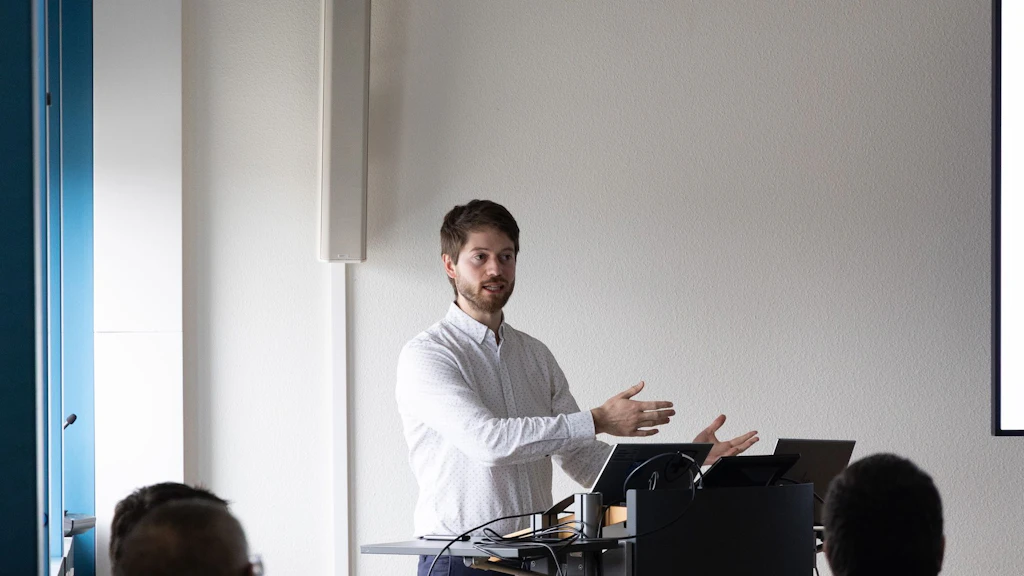
The latest findings and activities of the research projects are presented internally to the DDPS at the annual reporting events. This promotes knowledge sharing within the department and makes an important contribution to cooperation.
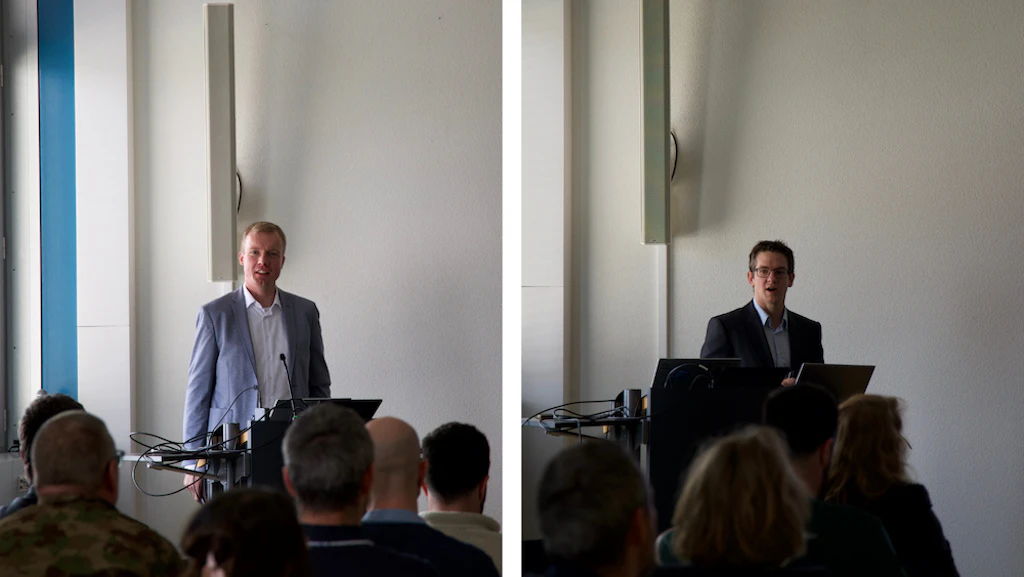
As part of the annual research reporting by armasuisse S+T, Dr Roland Meier and Dr Gérôme Bovet presented the latest findings of their research programmes in Thun. These research activities help to maintain and strengthen the operational capabilities of the Federal Department of Defence, Civil Protection and Sport (DDPS), provide early access to new technologies and methods, and foster cooperation with trusted partners. At the same time, this encourages cooperation with science, industry, the administration as well as defence and thereby provides access to experts and young talent.
Research Programme 3a - Cyberspace
The content of the research programme “Cyberspace” under the management of Dr Roland Meier focuses on three fields of competence consistent with the overall concept of cyber in the Swiss Armed Forces: Self-protection in cyberspace, operations in cyberspace and robust as well as secure data processing.
The projects presented from the past 12 months show how these focal points are implemented: In vulnerability research, a new analysis tool for identifying security gaps in software has been developed, amongst other innovations. Other work deals with the security of charging infrastructures for electric vehicles as well as with communication systems in aviation. In the area of secure data processing, the focus is on future-oriented technologies such as SCION (Scalability, Control and Isolation On Next-Generation Networks, a secure internet architecture developed at ETH Zurich), as well as the development of a secure smartphone. It was also examined how artificial intelligence (AI) can be used both for cyber attacks as well as to defend against them.
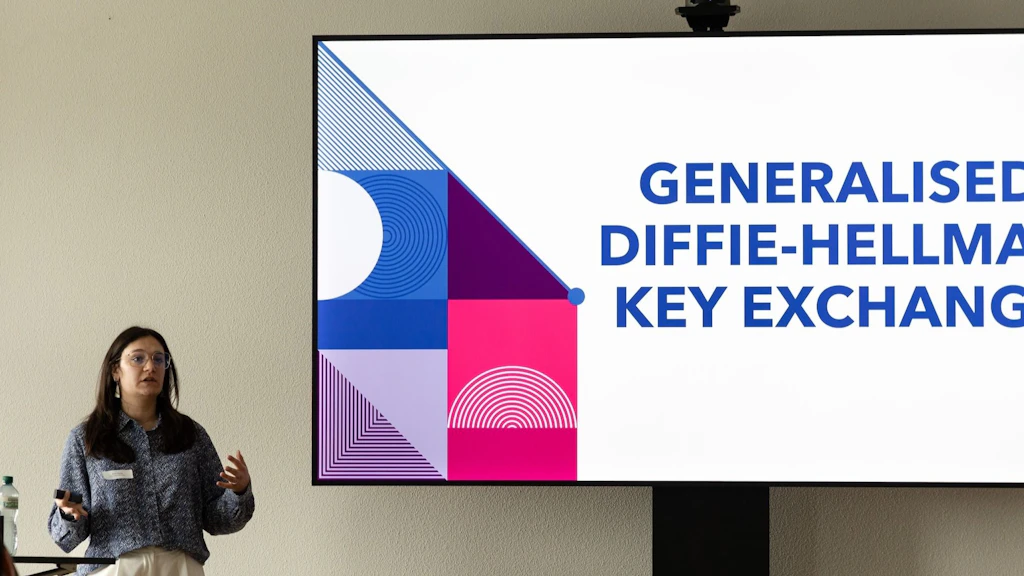
The morning’s programme was completed by contributions from three experts: Prof. Dr Guido Salvaneschi from the University of St. Gallen examined the security of “Infrastructure as code”, while Silvia Sconza, holder of a CYD Campus PhD Fellowship, presented new approaches in post-quantum cryptography based on knot theory. Dr Martin Strohmeier from armasuisse S+T presented the latest findings on the security of satellite communication.
Research Programme 3b - Cyber & Intelligence Analytics
Dr Gérôme Bovet’s research programme “Cyber & Intelligence Analytics” focused on the use of data and AI to strengthen cyber defence and intelligence capabilities. In cyberspace, which has become indispensable and exposed to strong threats, the research programme aims to identify suspicious activities early on, analyse large data quantities and provide decision-makers with an information advantage. In particular, big data and AI technologies enable anomalies to be identified, attempts to manipulate information to be detected and critical situations to be anticipated. The risks associated with the increasing use of AI, in particular its susceptibility to manipulation, distortion and targeted attacks, are currently being analysed in research projects. Accordingly, one goal is the development of robust, reliable and secure AI systems that can be used in sensitive environments.
The contributions focused on the following topics: anticipating cyberattacks in the context of the geopolitical landscape, by Dr Myriam Dunn Cavelty from the Center for Security Studies at ETH Zurich. Dr Anastasiia Kucherenko from HES-SO//Valais-Wallis explained how large language models (LLMs) could be made more secure by forgetting training data. Finally, Lucas Crijns from armasuisse S+T shared his vision of hybrid and on-premises cloud architectures.
Conclusion and outlook
The research programmes presented show how armasuisse S+T is contributing to developing cyber security in Switzerland. Expertise is being established and enhanced through the cooperation with national and international partners from science, industry, the administration and defence. This results in a network of specialists and young talent who can be supported accordingly, thus ensuring the long-term safeguarding of skills.