

Multispectral Camouflage Suits – How army personnel become invisible
What may at first glance resemble a game of “Where’s Wally?” is, in operational use, far more than a game of hide-and-seek. It is about survival: whoever is detected is at risk. Yet visual camouflage alone is no longer sufficient today. Modern reconnaissance sensors can also detect signatures that remain invisible to the human eye. This is where multispectral camouflage suits come into play. They not only conceal soldiers from the human eye but also make it more difficult for technical sensors operating in the infrared spectrum to detect them.
Lucia Egger, specialist area Communication, competence area Strategic Staff
This text was translated using AI (DeepL)
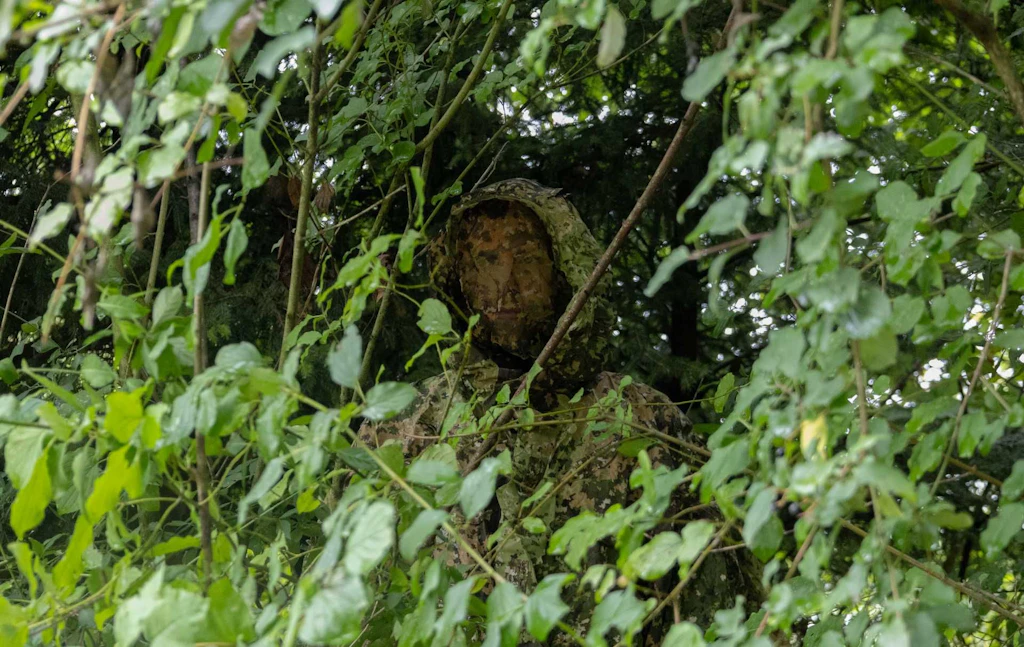
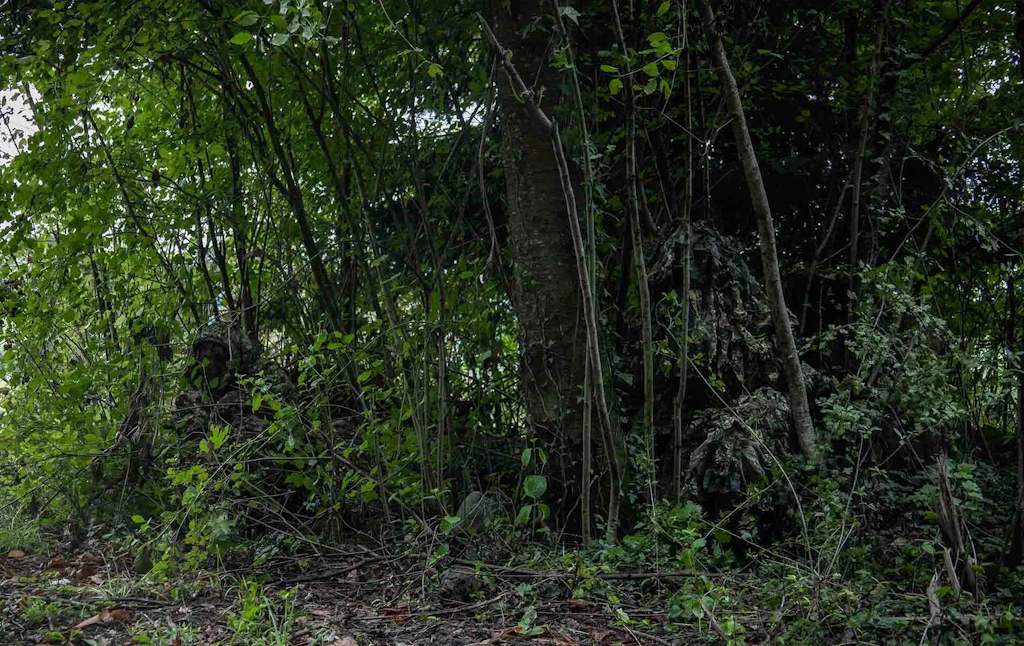
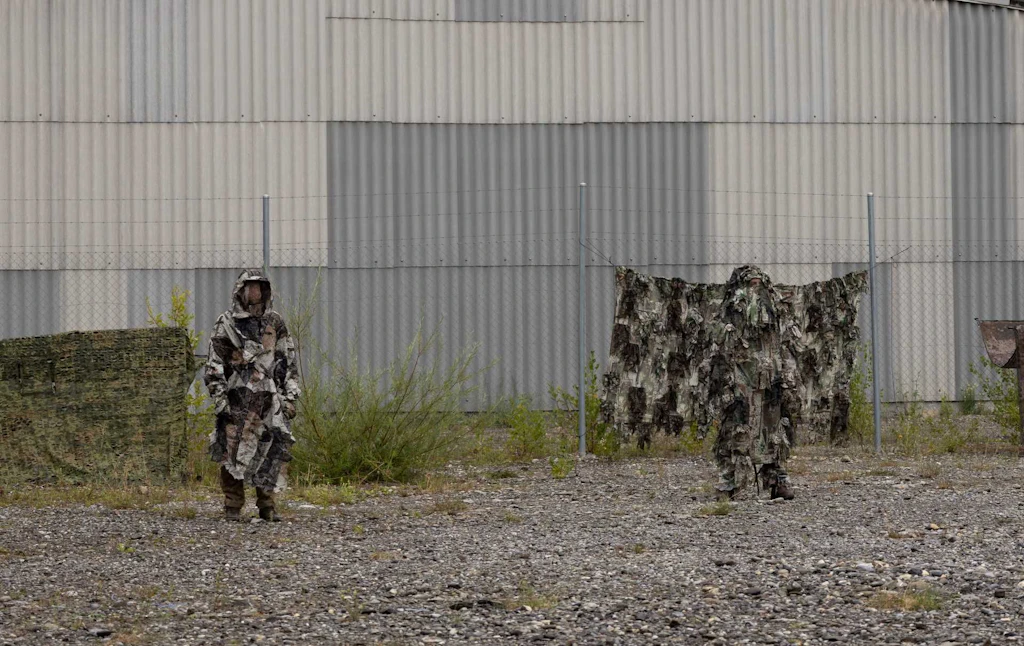
As part of the Multispectral Camouflage Systems (MSTS) project, the Federal Office for Defence Procurement armasuisse is procuring new camouflage and deception systems. These also include full-body camouflage systems for members of the Swiss Armed Forces. The aim is to reduce the detectability of troops, equipment and infrastructure by modern reconnaissance sensors.
Camouflage begins with the human eye
Camouflage patterns, colours and three-dimensional structures blur contours and break up a person’s characteristic silhouette. As a result, a person blends more effectively into their surroundings and becomes significantly harder to detect in the field. As part of the MSTS project, so-called Ghillie suits were evaluated. These consist of full-body camouflage suits with a hood, as well as camouflage elements for the torso, arms and legs. In addition, camouflage ponchos were assessed that can be worn over clothing and equipment like a lightweight poncho. Both systems can be further enhanced with natural vegetation such as leaves and branches to improve their camouflage effectiveness.
What the eye cannot see
A person may be well camouflaged visually and still remain clearly visible to technical reconnaissance sensors. Thermal imaging devices provide a particularly striking example: while a soldier blends almost completely into the surroundings for the human eye, body heat often stands out clearly from the background in a thermal image. Depending on the display mode, the person appears as a bright or orange-red silhouette. This is precisely where multispectral camouflage comes into play: specialised fibres, coatings and textile structures influence how heat is dissipated into the surrounding environment. This prevents body heat from standing out clearly from its surroundings in a thermal image.
Between forest and city
Not every environment places the same demands on camouflage. In forests and meadows, shades of green and brown dominate the landscape, while built-up areas are characterised by different colours, contrasts and structures. Seasonal changes add another layer of complexity: while fresh greenery dominates in spring, snow and bare branches shape the landscape in winter. To remain effective in different environments and throughout the seasons, armasuisse is procuring a range of multispectral camouflage systems.
Technology that has to be worn
Personal camouflage must not only be technically effective but also prove its worth in the field. A camouflage suit should provide protection without restricting the wearer. It must be easy to carry, quick to put on and take off, and provide sufficient freedom of movement. The systems were also assessed to determine whether they can be used with a ballistic protective helmet, require little storage space and allow personal equipment to remain easily accessible. Feedback from the troops was crucial in this process. It helped ensure that the systems are practical for the day-to-day needs of soldiers.
Who detects whom first?
The systems selected as part of the MSTS project represent the current state of the art and provide a uniform, lightweight solution for personal camouflage. However, as reconnaissance technologies continue to evolve, the demands placed on camouflage are increasing as well. New camouflage materials and technologies may open up further possibilities in the future to reduce signatures even more effectively. Ultimately, the evolution of camouflage and reconnaissance is driven by one fundamental question, one that can be decisive for protection and survival in operational use: who detects whom first?