

«First and foremost, the security of Switzerland benefits from the research results of armasuisse S+T»
Who benefits from the research results of armasuisse S+T? How has research developed in general? And what is armasuisse S+T even doing in the research area? In the interview below, Dr Thomas Rothacher, Head of the competence sector armasuisse Science and Technology (S+T) and Dr Urs Böniger, Head of the specialist area Research and Innovation, provide answers to these and other questions.
Interview with Dr Thomas Rothacher, Head of the competence sector armasuisse S+T and Dr Urs Böniger, Head of the competence sector Research and Innovation, conducted by Lucas Ballerstedt and Sarah Trösch, Staff, competence sector S+T
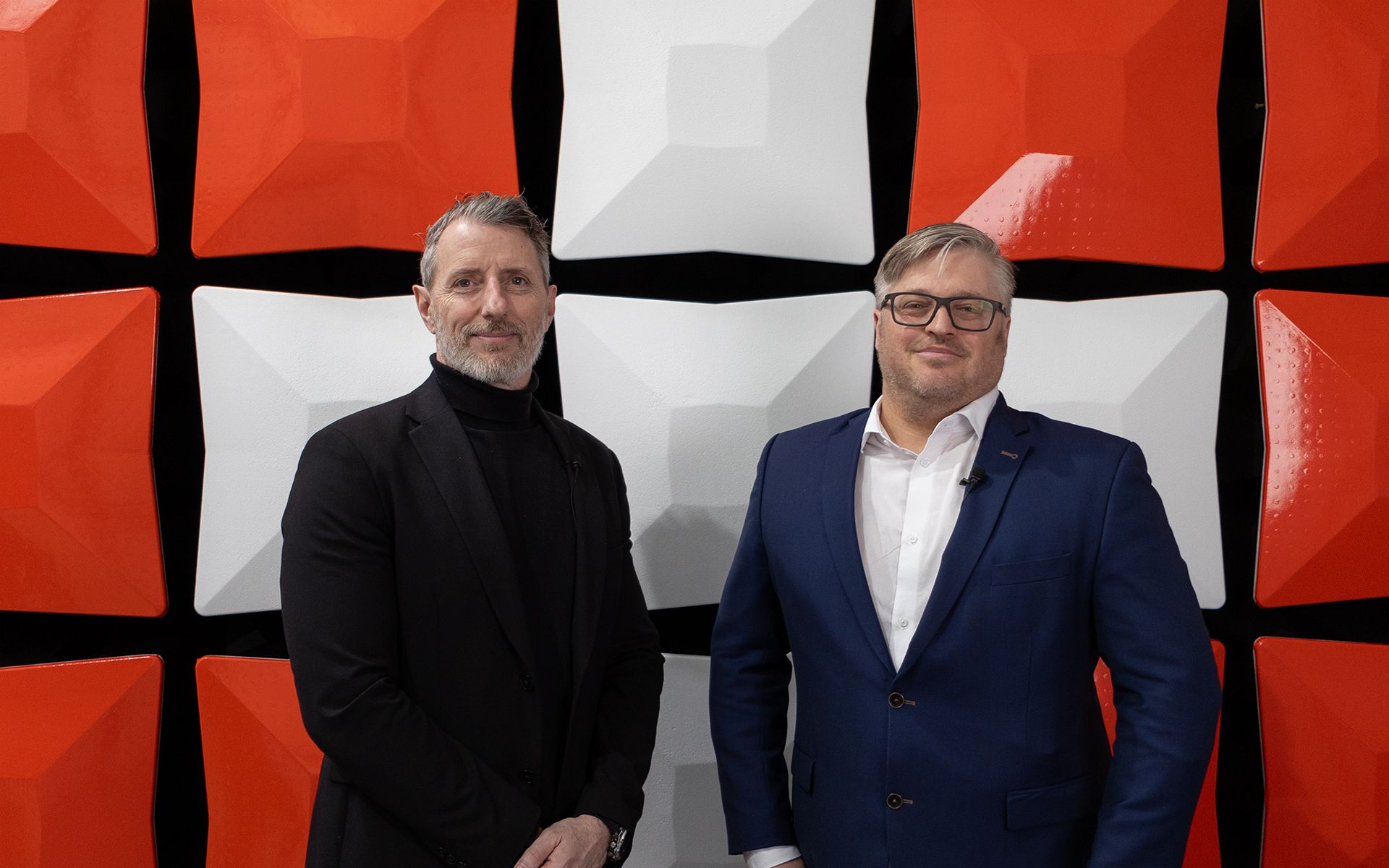
Thomas, Urs
What is armasuisse S+T doing in the research area? Can you explain more about this?
Thomas: First of all, it is important to know that armasuisse Science and Technology carries out applied research. We do this in the department, it’s called policy research. Here, we examine technological changes and developments.
Urs: What does that mean for example? How can we detect a drone today? What are the performance limits of algorithms? And how does the development of drone technology influence the detection of drones? These are questions where we develop competences and knowledge in order to supply corresponding answers.
How has research at armasuisse S+T developed, particularly with regard to the increasingly rapid changes in technology?
Thomas: Research was not always a topic for armasuisse or its predecessor organisations. It was only with the founding of armasuisse S+T that research was added, thus moving closer to the present day and the technologies in the systems that are used.
Urs: Over the last few years, we have reinforced topics such as artificial intelligence, unmanned systems and cyber. With the newly created DDPS innovation spaces, we are trying to transpose these competences and this knowledge into obtainable solutions.
Thomas, who gains from the research results of armasuisse S+T and which benefits do our partners have?
Thomas: I’m convinced that the security of Switzerland benefits from these results. And of course our users, at the end of the chain, should also profit from them. This would be the case if our findings were to be incorporated into actual systems, because we would then be able to assess them and could also say whether these systems work or not. This means that the Armed Forces benefit. On the other hand, our partners who work together on these research projects definitely also benefit. This would be industry, if we were closer to the systems or academia, if we were closer to the basics. This would involve one or another research paper.
Urs, armasuisse S+T is represented in various national and international committees. What impact does the exchange of knowledge have on research activities?
Urs: These committees enable us to get to know the challenges of other stakeholders at national and international level, to better understand their research activities and thus also to reflect our findings and our knowledge. This would enable us to distribute our knowledge and our assessment ability among several people and thus make assessments on a competent basis.
Where is research headed? Which topics will become increasingly significant for armasuisse S+T in future?
Thomas: Of course, we aren’t certain about this ourselves yet. For this reason, we have a research programme that deals with the future, and specifically with foresight. Which looks more closely at the focal areas which will exist in the future. If we look a little at the methods, I think that we need to depart from the assessment ability and to work more with use cases. This means that we should actually already be able to say quite specifically what we want to use these research results for and how they will ensure added value for the troops.
Urs: We also follow the megatrends in the area of security technologies. What we can already say today about all our programmes and activities is that the available data and the intelligent usage of this data has increased. This can be seen with the autonomous systems, as well as in the area of image recognition. That will definitely be a focal point which we will be addressing in the next few years.
Finally, please give us a statement on what the research at armasuisse S+T - and thus also your work - makes so exciting and special for you.
Urs: For me, the special appeal of the work at S+T, and in research too, is that you can work together with very different stakeholders, in other words the user, the military. As well as with academia and industry. We can thus develop and work out answers for complex scientific problems, for today and for the future.
Thomas: And I find it extremely exciting that we can generate new results every day in this rapid technological transition and with these results are able to cover the requirements or a need for the security of Switzerland.
Many thanks to you both for taking the time for this interview.
Urs: Many thanks to you and I hope that we were able to give you a perspective on research at S+T.
Thomas: Many thanks for your time.