New radar methods for drone detection tested on a NATO research campaign
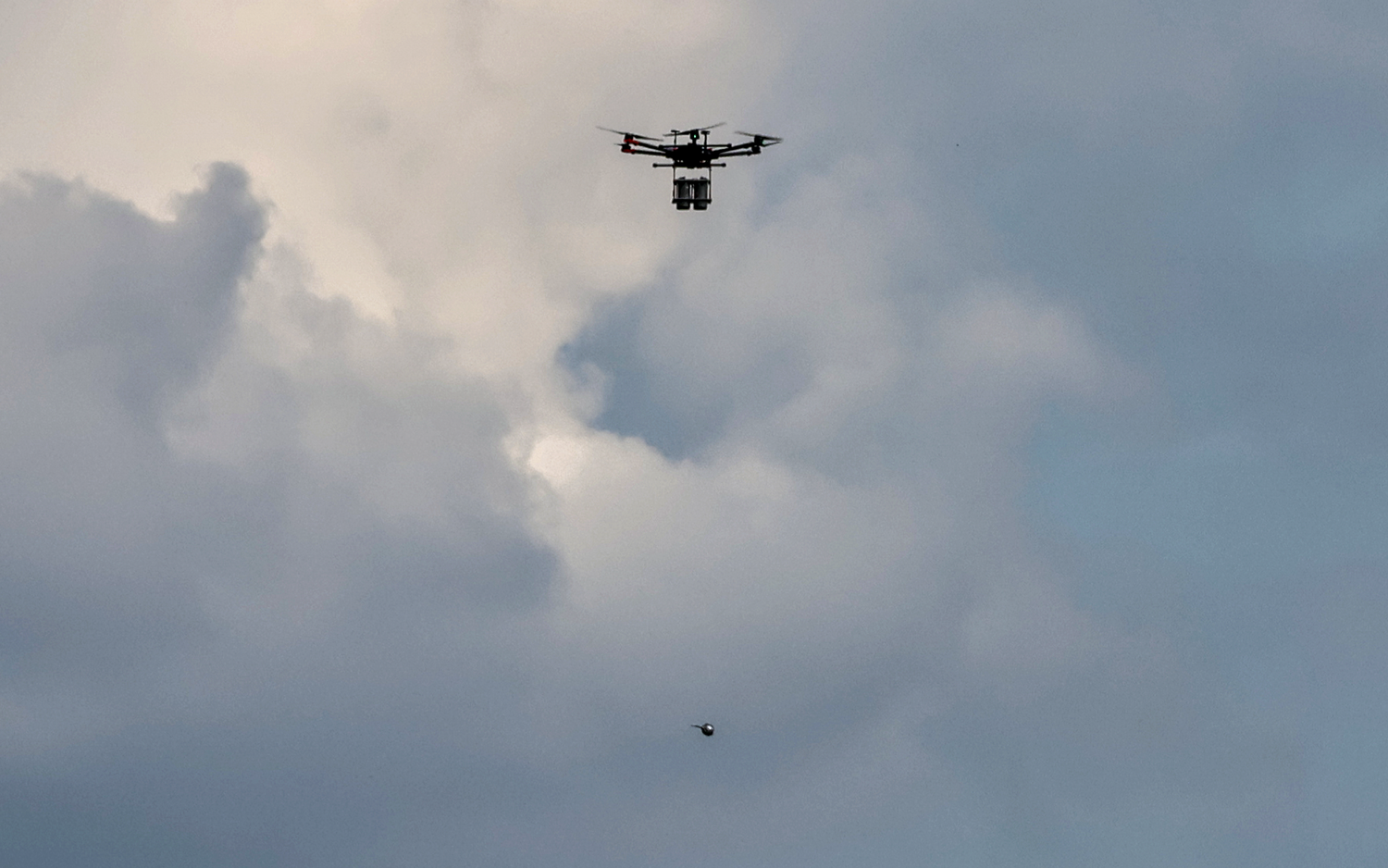
armasuisse Science and Technology was able to obtain valuable test data with its sensor network «miniCODIR» as part of the NATO exercise TIE’23. The focus of the measurements was on the detection and classification of drones and swarms of drones in challenging scenarios. In particular, payload drops, such as grenades, were simulated.
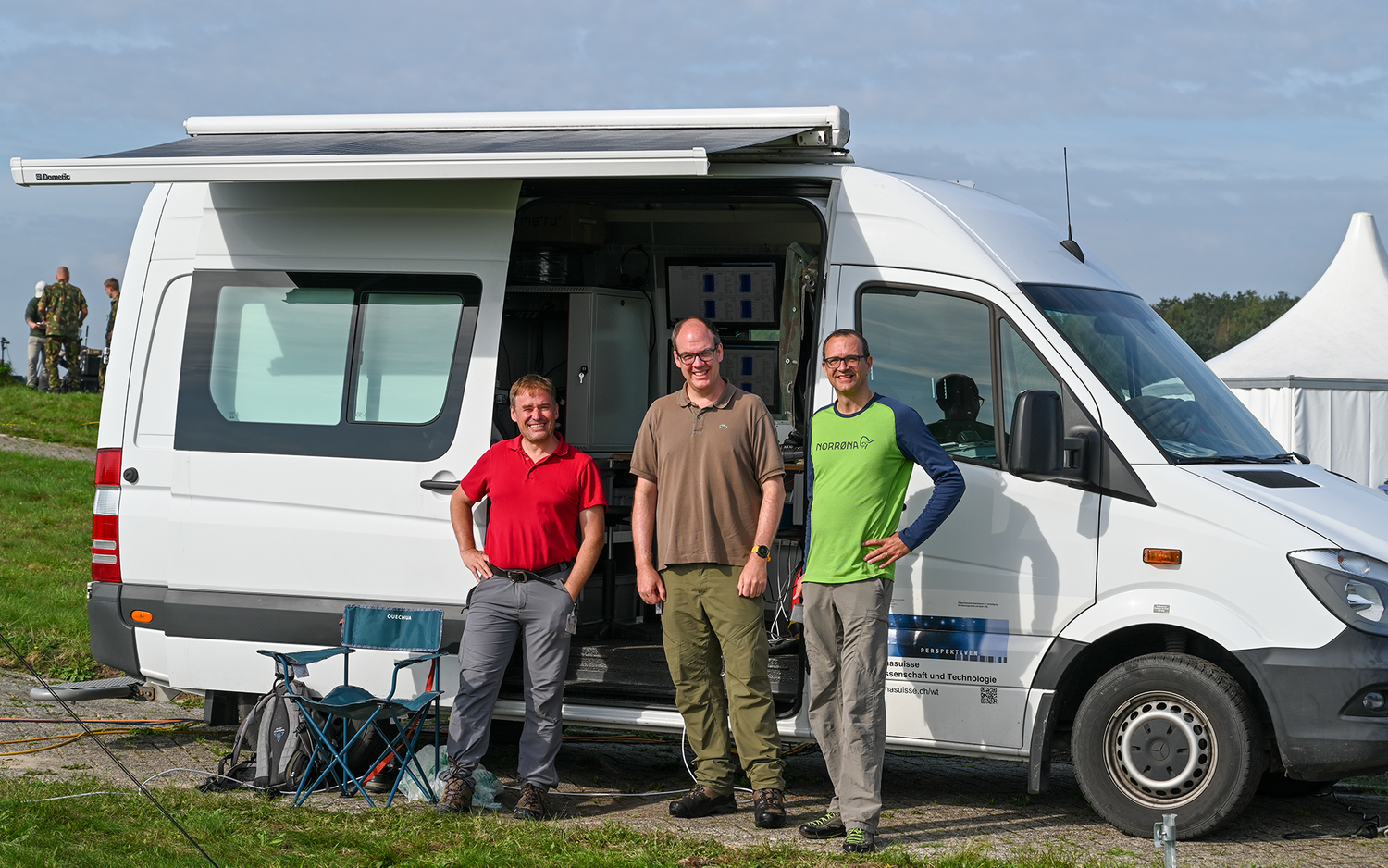
Roland Oechslin and Alexander Stettler, specialist area Sensory Analysis, and Peter Wellig, specialist area Research Management and Operations Research, competence sector Science and Technology
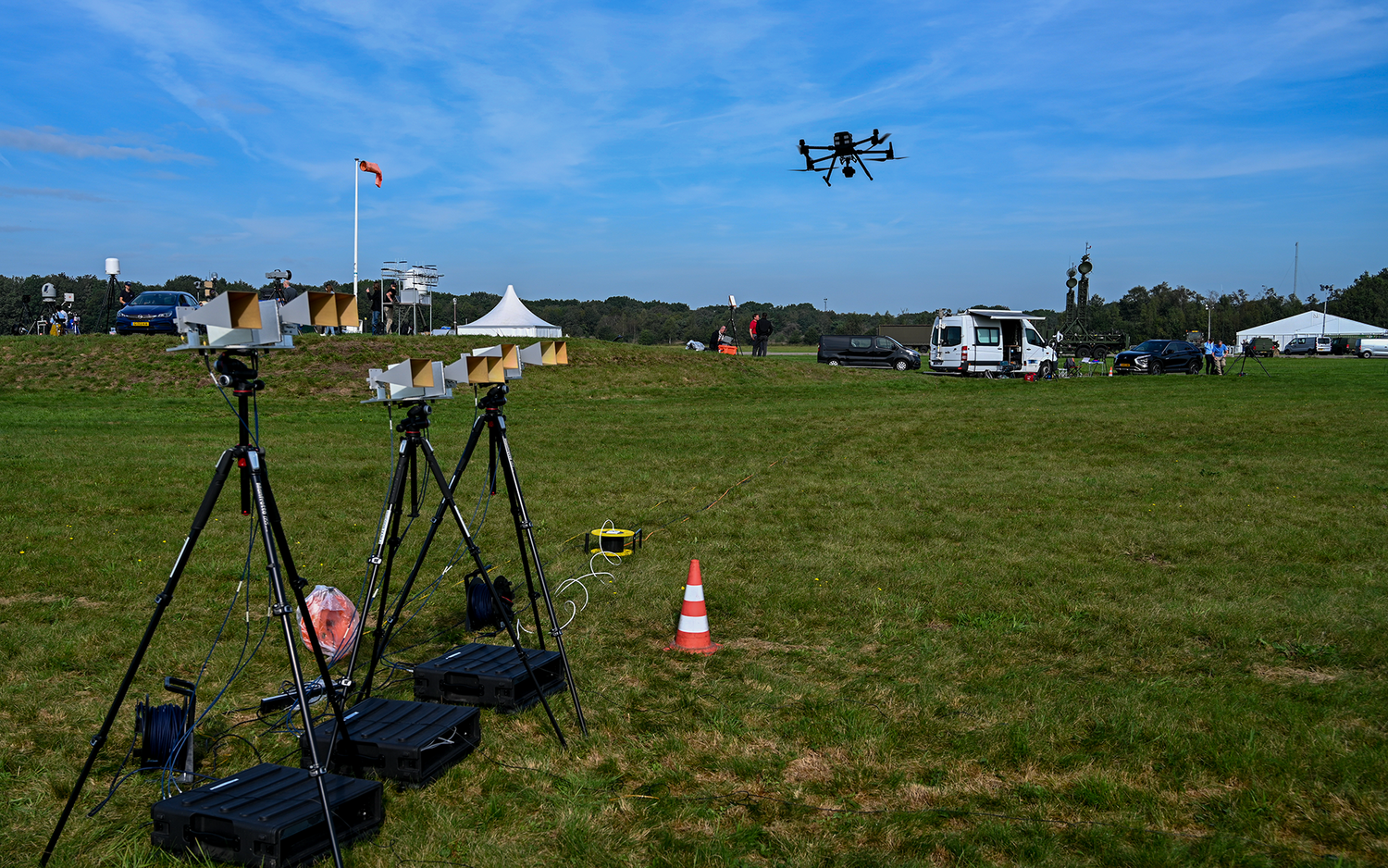
The international exchange of knowledge and cooperation in the NATO Science & Technology Organization (STO) is continuously expanding findings. The knowledge obtained flows into current procurement projects for drone defence, thus making a contribution to the security of Switzerland.
In September, the Technical Interoperability Exercise 2023, known as TIE'23, took place in the Netherlands. C-UAV (Counter Unmanned Aerial Vehicles), sensors, effectors and C2 systems from around 50 manufacturers were tested together. The focus was on interoperability, in other words, the cooperation and interaction of systems from different manufacturers.
C-UAV
The term «drone» is the colloquial term for an unmanned aircraft (UAV - Unmanned Aerial Vehicle). These include small commercial drones from the hobby sector as well as large military drones.
During the setup phase of the exercise in calendar week 37, the SET-307 research group of NATO STO was able to use the infrastructure of TIE’23. In particular, drones and pilots were available to survey demanding scenarios with their experimental radar systems and thus to obtain important data and experiences for research and development.
SET-307
The Sensors and Electronics Technology (SET) panel steers a number of research groups on military-relevant topics in sensory analysis and communications. One such group consists of experts from academia, military research institutes and industry. The group SET-307 is involved in novel radar methods for drone detection and classification in complex environments.
armasuisse S+T works together with the group SET-307 and used the opportunity to record data from drone flights and swarms of drones in various different configurations with its sensor network «miniCODIR». In particular, payload drops, such as grenades, were reconstructed. This measurement data will be evaluated over the coming weeks with different algorithms. One focus is on the analysis of modulation lines.
Modulation lines
Modulation lines occur when a radar sensor detects an object with rotating parts. The scattered radar signal contains a periodic modulation of the amplitude, in other words, a regular fluctuation, which can be made visible with appropriate algorithms. This enables helicopters and aircraft with propeller or jet engines, for example, to be characterised and classified. In the same manner, drones can be distinguished from birds, for example.
In addition to detection, the analysis of modulation lines aims to enable classification of drones. The following research questions are central to this:
- Can different drone types be distinguished from each other and classified?
- Can a drone with a load be distinguished from one without a load, particularly in a swarm?
- Can a payload drop be detected?
- Can abrupt manoeuvres, such as fast changes of direction, be detected and used to support the tracker?
- Can a bistatic radar device (transmitter and receiver are physically separated) provide added value in drone detection and classification compared with a monstatic system?
In addition to the experiments conducted in the SET-307 research group, important impulses for future research and development work within armasuisse S+T were gained: The interoperability between the systems involved in the TIE'23 exercise are essentially based on the newly developed SAPIENT protocol (currently being developed into the NATO standard). This enables a relatively simple, manufacturer-independent exchange of data between sensor, effector and C2 systems and can be integrated into existing and new systems with relatively little effort.
The measurements made at the TIE’23 can be viewed as a continuation of similar activities such as those in Bure in 2021 and in Norway in 2022 and will be coordinated by the research programme Reconnaissance and Surveillance. In this process, development will continue on the systems and algorithms, which will be adapted to the current issues. The findings will flow into current procurement projects for drone defence.