

ARCHE 2026: From the lab to the field for tomorrow's disaster relief
In collaboration with the Engineer/Rescue/NBC Training Unit and ETH Zurich, the Swiss Drone and Robotics Center (SDRC) of armasuisse Science and Technology (S+T) held the ninth edition of ARCHE at the Epeisses military training village near Avully. From June 22 to 26, 2026, approximately 160 participants from various research teams gathered to test and further develop drone and robotics technologies for disaster response.
Julian Martin, Cyber Defence, armasuisse Science and Technology, Moana Häfeli, Staff, Science and Technology
In brief
In collaboration with the Engineer/Rescue/NBC Training Unit and ETH Zurich, the Swiss Drone and Robotics Center (SDRC) of armasuisse Science and Technology (S+T) held the ninth edition of ARCHE at the Epeisses military training village near Avully. From June 22 to 26, 2026, approximately 160 participants from various research teams gathered to test and further develop drone and robotics technologies for disaster response.
A Dynamic Win-Win Situation
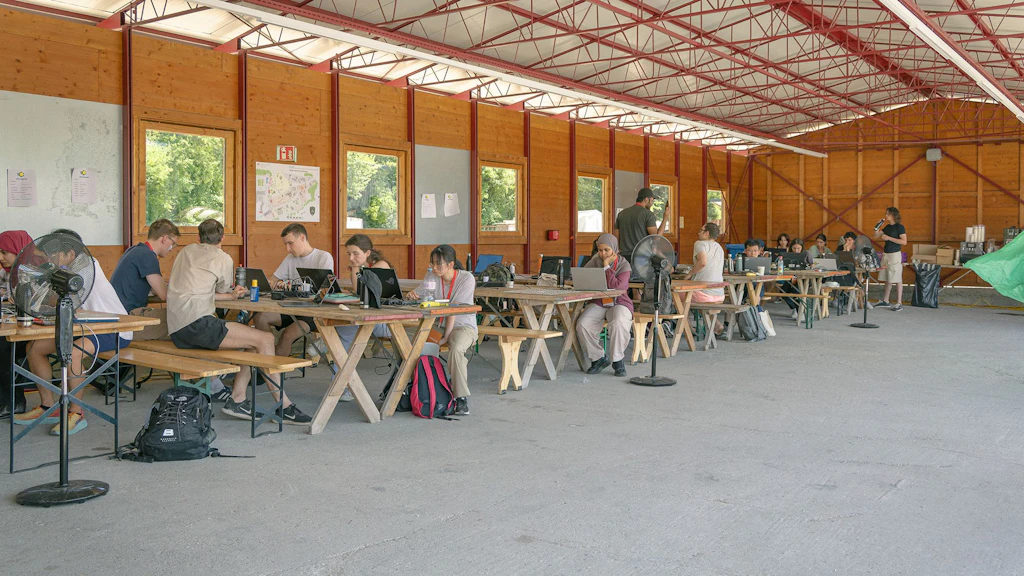
Since its founding, ARCHE has become a fixture on the calendars of researchers and the Swiss Armed Forces Engineering/Rescue/NBC Training Unit. The event serves as a forum for the scientific community in the field of disaster relief and acts as a central hub that strengthens collaboration between research and practice.
This direct exchange enables researchers to tailor their robotic technologies to the specific operational needs of the field and to further develop them. At the same time, decision-makers from various security agencies gain insight into the future of robotics in the field of disaster response. “The exchange with the researchers here [at ARCHE] gives us an advantage in seeing what is already possible and what still needs to be adapted,” explains Kurt Brugger, Lieutenant Colonel, Career Officer for Doctrine/Planning/Readiness at the Engineer/Rescue/NBC Training Unit, adding, “ARCHE makes a valuable and significant contribution to our understanding of future support systems in autonomous robotics.”
Opportunities Through Unique Testing Capabilities
A key benefit of ARCHE lies in the ability to conduct tests under real-world conditions. This gives participating research teams the opportunity to take their semi-autonomous robots and drone systems out of the lab and into the field. Whether it’s a steel tower, a water basin, or buildings at risk of collapse—the military training village in Epeisses provides teams with real-world operational conditions and a diverse range of infrastructure. However, the design of the tests is entirely up to the participants. “The key is that ARCHE enables researchers to derive the greatest possible scientific benefit while simultaneously highlighting the relevant use case for military disaster relief,” explains Joseph Boucher, Scientific Project Manager at armasuisse S+T. This approach promotes a practical evaluation of the performance, robustness, and user-friendliness of the systems in the field.
Maria Trodella, Operations Manager at ETH Zurich, confirms this and explains: “ARCHE is a huge opportunity for us to take our research projects out of the lab and into the real world.” In this way, ARCHE creates an ideal environment at the intersection of innovation, testing, and real-world operations, which contributes to knowledge transfer and promotes the suitability of current and future technologies in the field of security and disaster relief.
An Overview of Robotic Systems
Magnecko
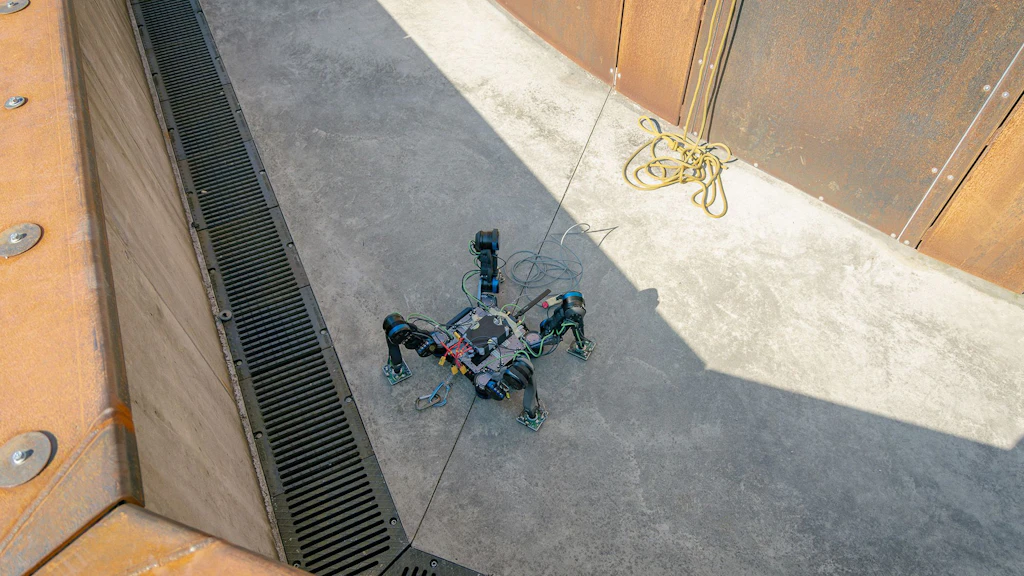
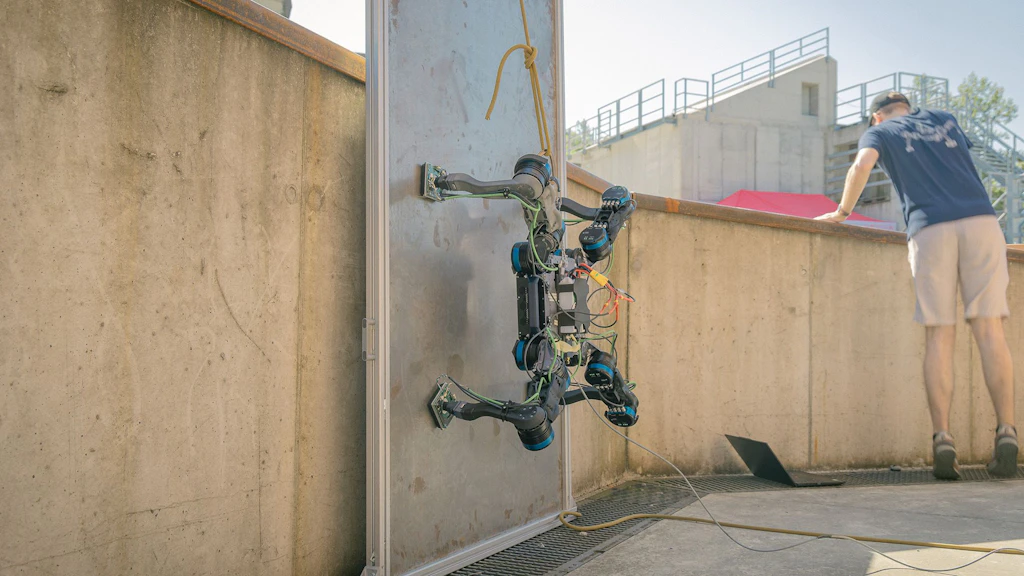
As in the two previous years, the Magnecko research team at ETH Zurich used ARCHE as an opportunity to further test its robotic applications. The climbing robot, equipped with magnetic feet, is designed to detect loose screws, cracks, and rust on various surfaces at an early stage, thereby preventing potential structural damage.
This year, the team focused on two main areas:
First, climbing with a robot without magnetic feet using a cable winch. This is part of a research project on robotic exploration of the lunar surface. Since the lunar surface is characterized by craters and uneven terrain—where magnetic adhesion is not possible—the cable winch offers a suitable alternative for locomotion.
Second, the team presented a newly developed climbing robot based on the findings and datasets from last year’s tests, which was deployed for the first time under real-world conditions at ARCHE. The primary goal here was to gain further insights from data analysis and data collection, as well as to further develop the robotic application.
ANYmal D
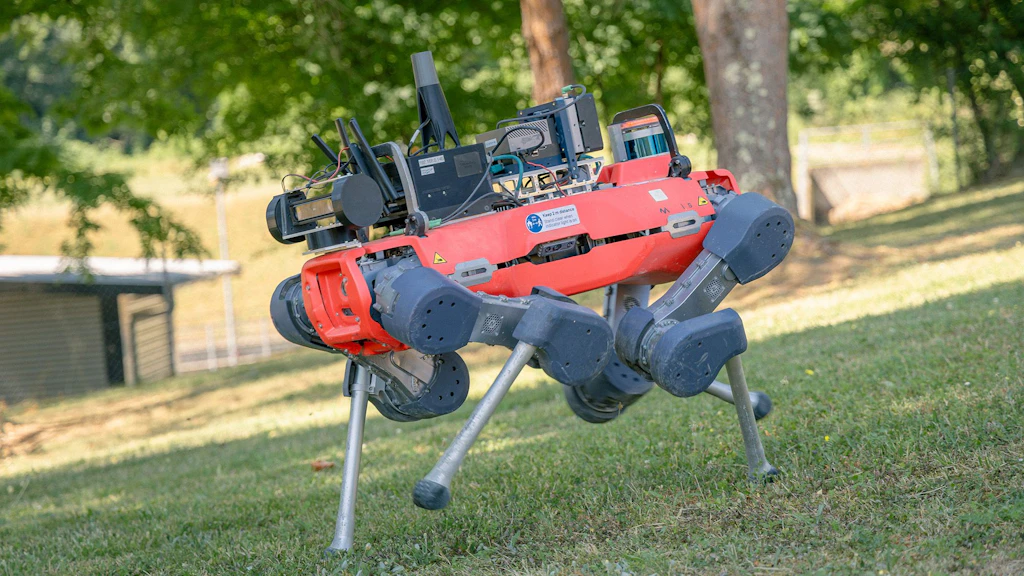
The development of cognitive abilities is the focus of the research team—Perception and Navigation—at the Robotics System Lab (RSL) at ETH Zurich, which uses the ANYmal D robot, whose hardware is provided by the manufacturer Anybotics. The software, on the other hand, is developed and refined by the research team itself. The goal is to locate and recognize objects in terrain without prior knowledge of the local geological conditions. Among other features, ANYmal D is equipped with a swiveling camera to identify objects.
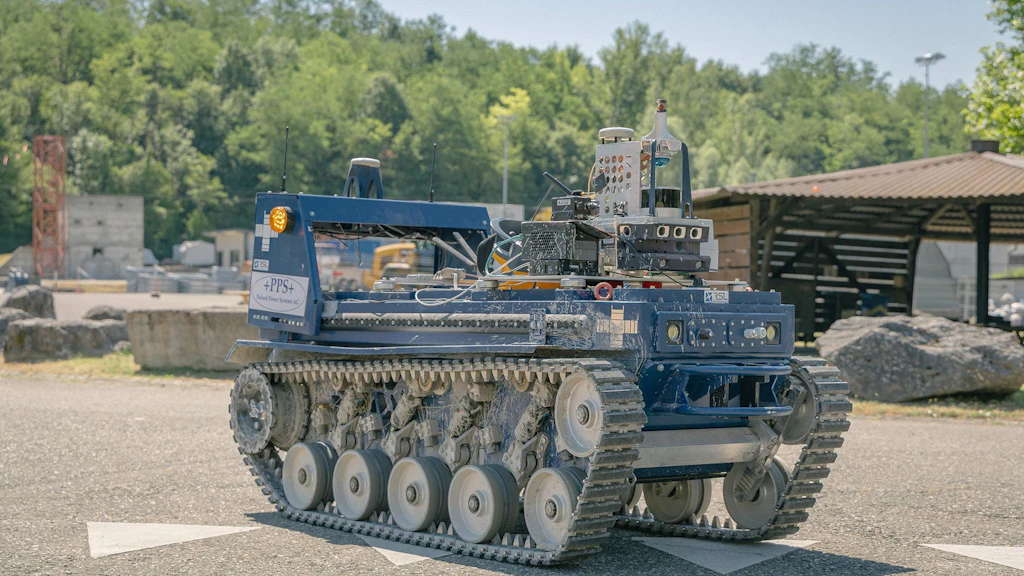
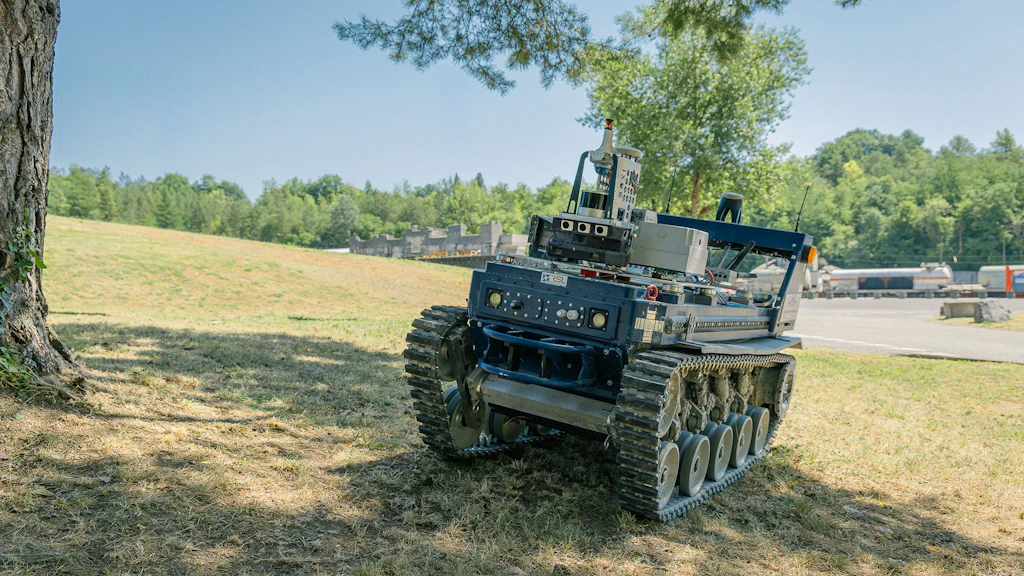
In addition to its work with ANYmal D, the team used ARCHE to further advance the development of the unmanned ground vehicle (UGV) PPS Search and Rescue Vehicle. The UGV was deployed for the first time at this year’s European Land Robot Trial (ELROB), co-organized by armasuisse S+T. The focus was on transporting goods back and forth quickly, efficiently, and autonomously in an uncontrolled environment.
The goal of the tests at ARCHE was to collect additional data for both robotic systems and incorporate this data into the ongoing research of the Perception and Navigation team. For example, parameters such as driving dynamics and the maximum operational speed of the PPS Search and Rescue Vehicle were examined.
The research work of the Perception and Navigation team with ANYmal D and the PPS Search and Rescue Vehicle was recognized with the Innovation Award at this year’s European Land Robot Trial (ELROB).
Robotics Summer School
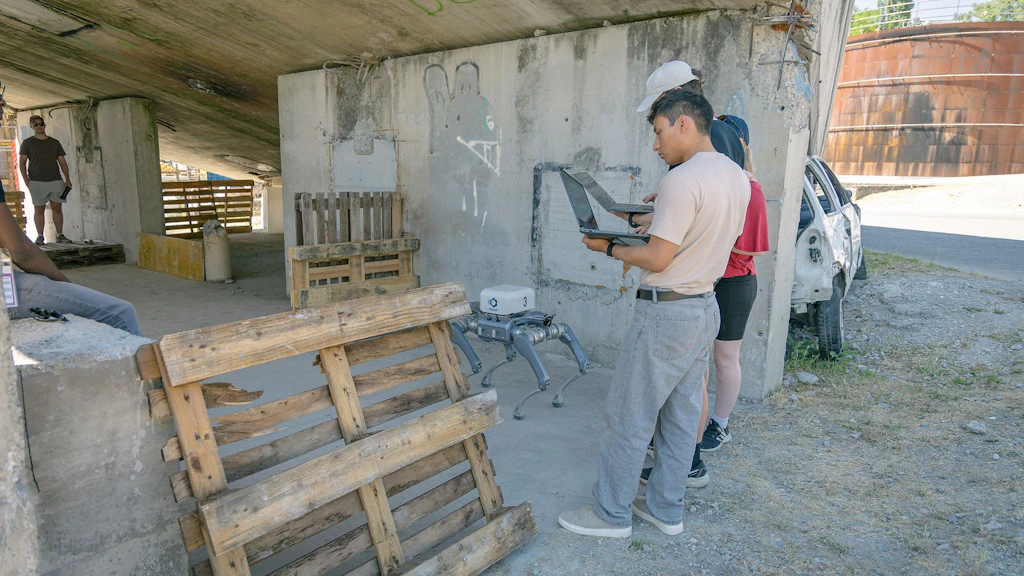
Rain, heat, and wind: Out in the field, that’s all part of robotics. About 50 students from ETH Zurich’s Robotics Summer School (RSS) got to experience this firsthand at ARCHE. This marks the seventh consecutive year that ETH Zurich’s RSS has been represented at ARCHE. Students from Swiss universities and abroad come together at the event to gain a realistic insight into the demands of robotics and to become more familiar with the field. For the first time, the students were able to carry out their tasks using a four-legged robot, also known as a robot dog. This type of robot offers significant advantages for the students, such as unlimited access to a variety of terrains and ground conditions.
Conclusion and Outlook
With the 2026 edition, ARCHE once again created a platform to bring together representatives from research, industry, and the Swiss Armed Forces, thereby contributing to Switzerland’s security. armasuisse S+T would like to thank all participants for their commitment and support and looks forward to the next edition in July 2027.