SimLab: A demonstrator of a standardised simulation landscape for the Armed Forces
Regular trainings are necessary for the Armed Forces and other security authorities to be able to train their operational readiness. These also increasingly include simulations. The simulation laboratory of armasuisse Science and Technology (S+T) supports the Armed Forces in standardising today’s various different simulators. This enables some cost-intensive exercises to be performed in advance, thus making a contribution to sustainability. In Armed Forces planning and combat support, simulations are also used which can benefit from this new concept.
Anela Ziko, Staff; Adrian Schneider and Matthias Sommer, Artificial Intelligence + Simulation Centre, Science and Technology
-zugeschnitten.jpg?auto=format)
With the demonstrator «SimLab», armasuisse Science and Technology is pursuing a standardised approach using simulation applications for training purposes. This enables scenarios to be tested over various domains of operations, independent of location. This saves expenditure for training efficient and diverse resources.
Training and Education Command plans, controls and is responsible for the standardised training of members of the Armed Forces. Training also includes the use of simulations. The Armed Forces thus already use numerous simulation systems adapted to the respective training requirements, for example for unit training, for driving and firing practice and in the area of tactical leadership training. These simulation applications are not yet networked with each other and thus not suitable for exercises extending over all domains of operations. In addition, this heterogeneous simulation landscape is also based on various different software sources, sometimes resulting in the need for expensive multiple developments. A similar situation exists in the areas of Armed Forces planning and combat support. To remedy this shortcoming, Training and Education Command tasked armasuisse Science and Technology with a study in 2020.
An individual simulation environment replaces various applications
The goal of the study was to find out what a standardised simulation landscape could look like. Software solutions which are suitable for a broad software basis (known as Holistic Simulation Environment, HSE) were then identified. These market solutions have standardised interfaces and an open architecture. They are also already being used in other NATO nations for simulation applications, thus enabling potential international connections. A further advantage is their modular structure, also known as plug-in architecture. This enables wide-ranging applications and data to be incorporated, such as the existing swisstopo terrain.
A networked simulation environment: the SimLab
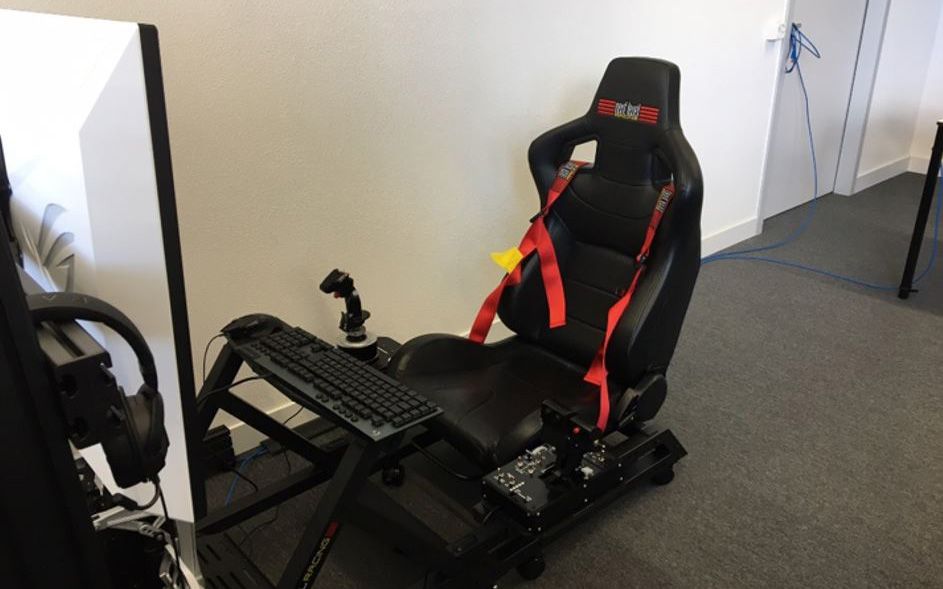
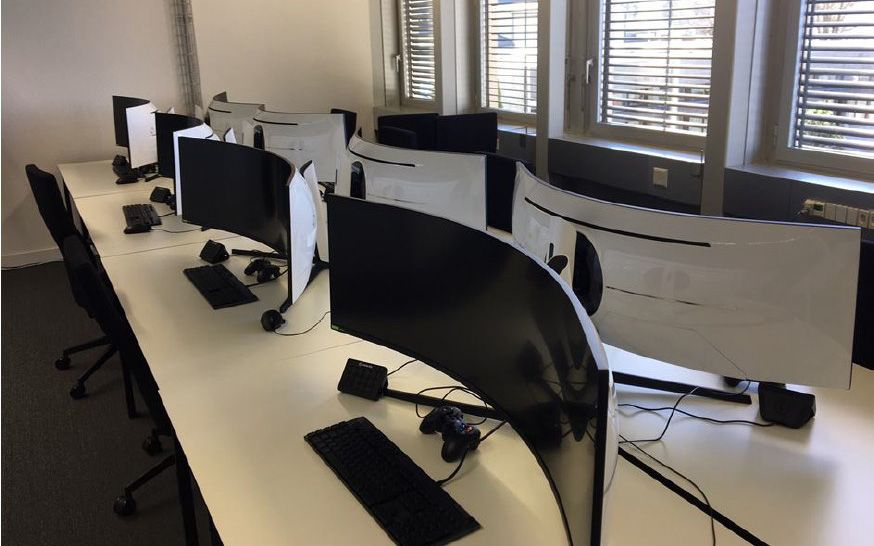
The study lays the foundation for today’s simulation laboratory, known in brief as SimLab. At the Thun location, ten stations are currently linked to a large simulation system with screens, gaming equipment and a powerful server. The SimLab is not a commercial product but a demonstrator that has been set up for the specific requirements of the Armed Forces. Internal tests showed that this SimLab simulation environment offers an effective and user-friendly platform for training.
It is thus now possible in Thun to examine and assess various simulation applications of the Swiss Armed Forces in a single simulation environment with regard to their suitability concerning Armed Forces development (CD&E), combat support as well as instruction and training. The SimLab can be viewed as a leading and adaptive simulation system. It enables new elements such as specific systems and system features to be easily and independently integrated in the simulation environment where they can be tested directly.
Initial experiences with SWISSINT
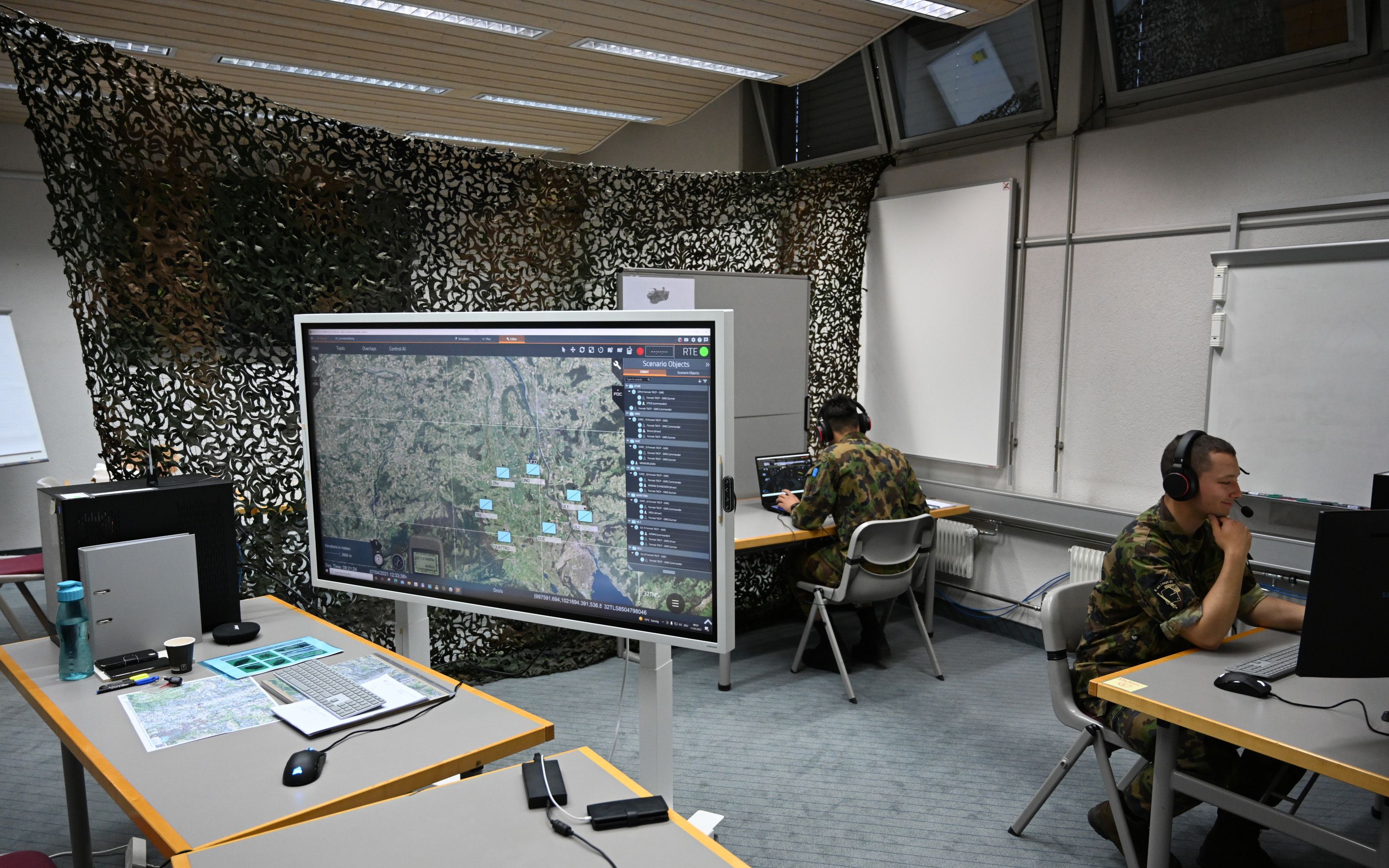
The example at SWISSINT, the competence centre of the Swiss Armed Forces for operations abroad, demonstrates the advantages of a networked simulation landscape. Here, military observers are trained for international operations. A part of the training now takes place in the BattleLab, an extension of the SimLab, which has been set up in cooperation with armasuisse S+T and SWISSINT. This virtual environment enables costly live training units to be prepared by virtual simulations. The experience has been very successful with the participants, and from the perspective of the organisation, training using simulation can also be considered to be extremely efficient and effective. Similar projects are also being planned with other parts of the Armed Forces.
Sustainability thanks to simulation options
Thanks to the SimLab, both locations as well as simulation applications can be connected with each other with little effort and cross-operational scenarios trained and analysed via a network. In addition, it is an efficient preparation for costly exercises in reality, as these can be carried out more expediently and on a more resource-conserving basis. This saves time and reduces emissions to a certain extent, as no journeys for individual training units are required and in some cases, real training journeys and flights can be replaced. As various different simulation applications for diverse requirements are now integrated in a single simulation environment and common data sources are used, multiple developments for the same requirement are no longer necessary.
In addition, plug-in architecture can be used to react to changed requirements, such as actions by joint armed forces, in a quick, straightforward manner. Simulation applications can thus also be connected on an international basis with relatively little effort and training carried out across countries. As the SimLab is a demonstrator for obtaining knowledge, various requirements and needs can be better substantiated based on the exercises carried out and thus the project risks for a final product considerably reduced.
Conclusion
Among other things, the SimLab is an important step in the direction of more modern, more efficient and more sustainable training for the Armed Forces. It shows how technology and innovation can contribute to improving the quality of training taking into account the sustainability aspect.
Infobox
Constructive
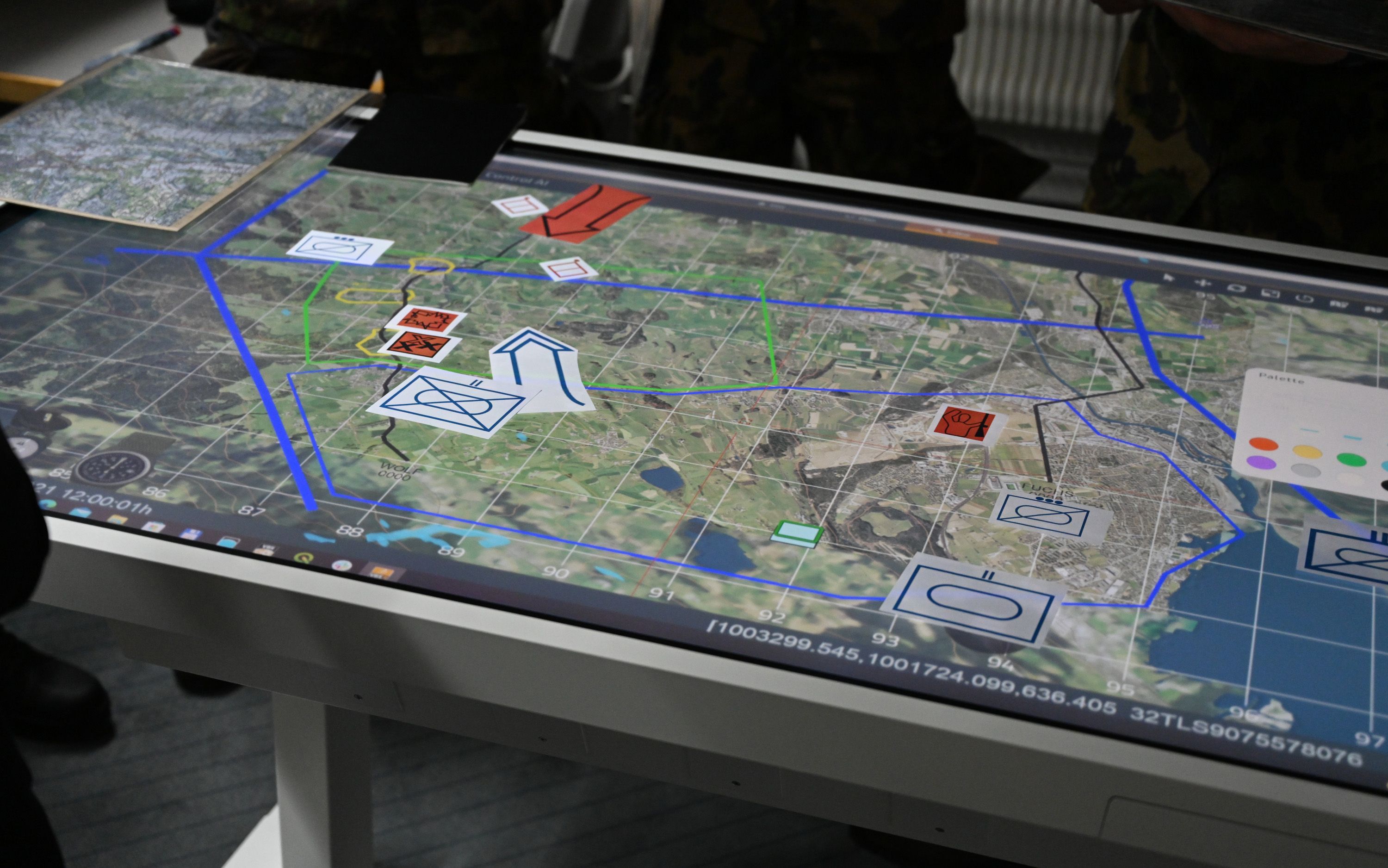
In constructive simulations, the environment, systems and persons are simulated. The users stimulate the simulation externally using parameters and constraints.
Virtual
In virtual simulations, the virtual systems are controlled directly by users in a virtual environment in real time. This is also described as «human in the loop».
-zugeschnitten.jpg?auto=format)