

Future-proof through increase in resilience: Two innovation expeditions for pilots
In July 2025, armasuisse Science and Technology (S+T) conducted two innovation expeditions within the DDPS innovation spaces, together with the Swiss Air Force Aeromedical Centre. The focus of both expeditions was to increase the resilience as well as the operative performance of the pilots. As part of these ongoing Science and Technology innovation expeditions, new approaches are being specifically tested to improve the cognitive and physical resilience of pilots in the long-term.
Jens Rehanek, Research and Innovation, armasuisse Science and Technology
In brief:
The DDPS innovation spaces of armasuisse Science and Technology (S+T) are instruments for finding solutions to existing challenges in the DDPS. These include ensuring initial measures of coping with the continuously growing physical and cognitive resilience requirements for the aircrew. As a result, two innovation expeditions have been developed within the DDPS innovation spaces, together with the Aeromedical Centre (AMC) of the Swiss Air Force. The first findings from both expeditions illustrate how the specific application of new technologies can contribute to increasing resilience in pilots.
In an increasingly technological and dynamic area of activity, the cognitive and physical resilience of pilots is the focus of their operational capability. Within the DDPS innovation spaces, two selected innovation expeditions are currently being pursued, which are directed at a considerable increase in this resilience – both in the cognitive as well as in the physical-sensory area. Both projects address specific, existing challenges in the training and everyday operations of the Air Force.
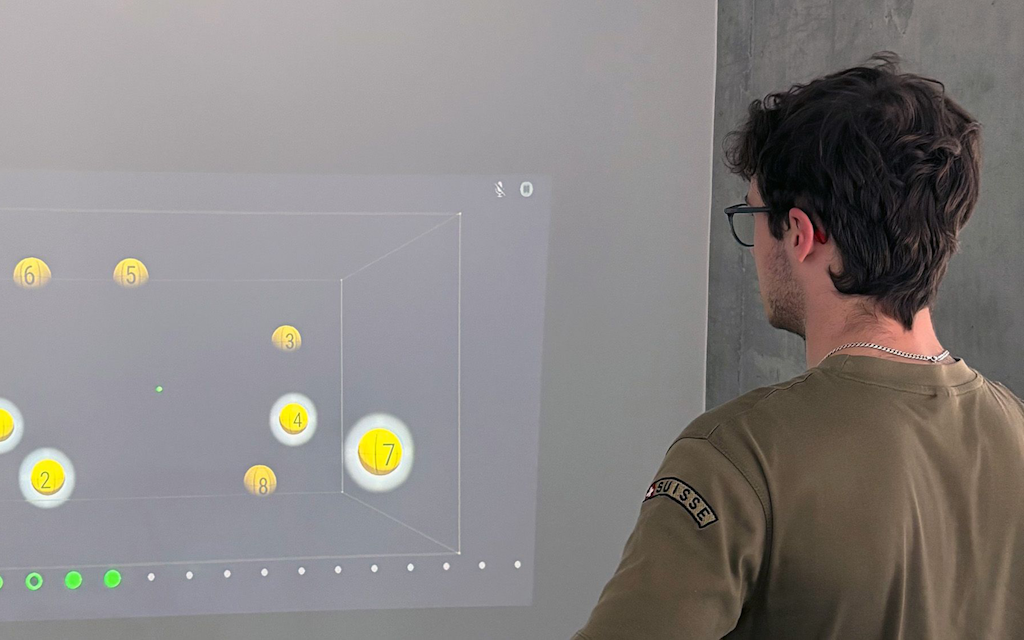
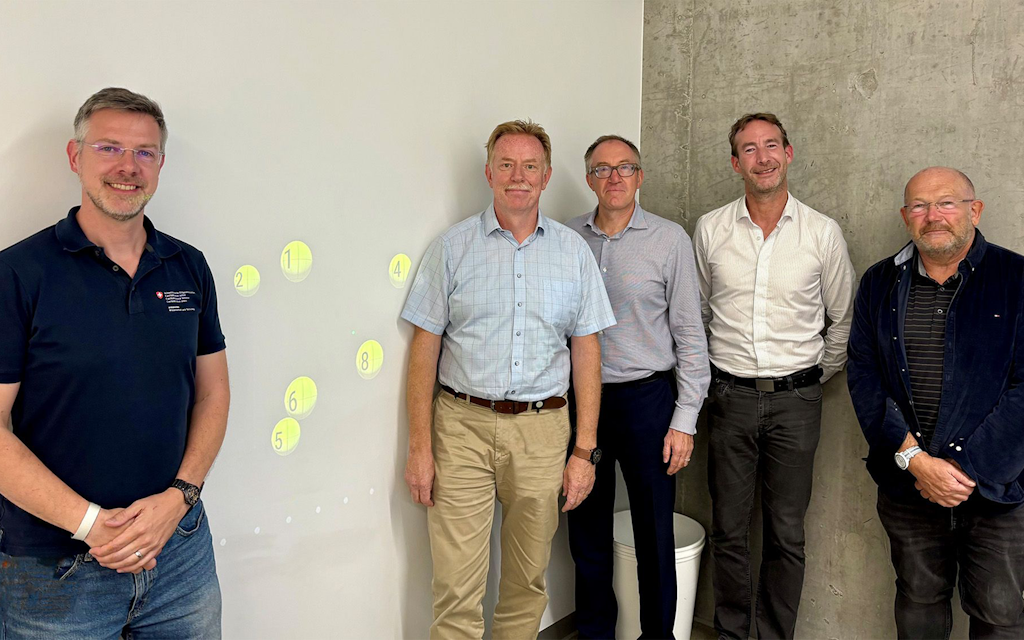
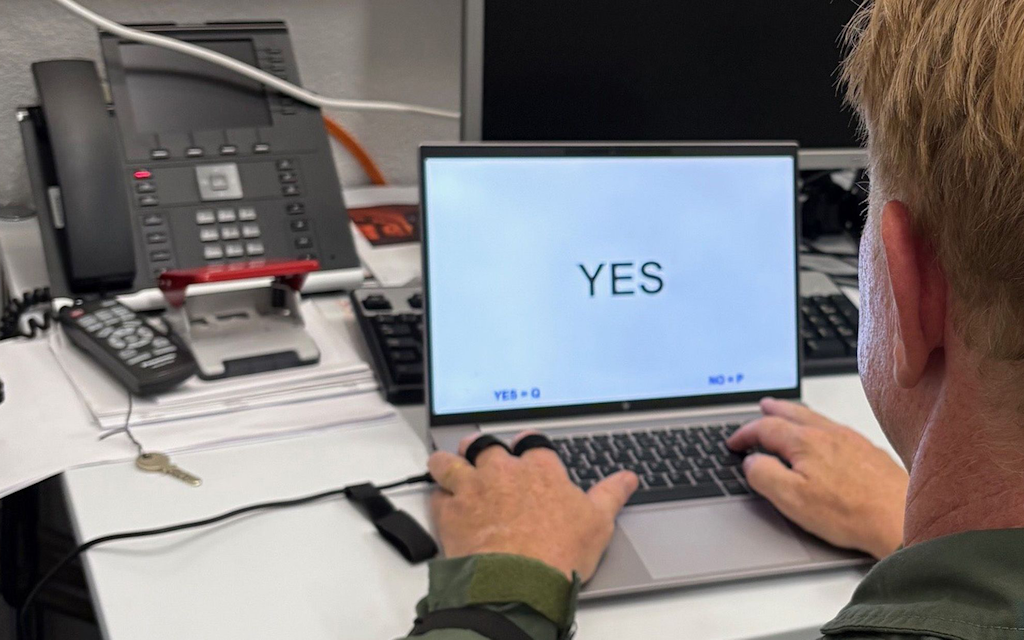
NeuroVision: Cognitive performance optimisation in real time
The expedition NeuroVision is dedicated to the increased cognitive pressure on the aircrew through highly complex systems. It examines the use of visual and mental training methods for encouraging concentration, spatial perception and decision-making ability under stress. The goal is to recognise individual cognitive patterns, visual impairment (which can also impair or delay information processing) and to strengthen them through targeted training – for example, for scenarios with a high level of mental strain or after long breaks in flight operation. Perception, attention and decision-making ability should thus be maintained and improved in stress situations. Based on NeuroTracker technology, the visual reaction speed of pilots will be recorded and trained. The first tests show: Even individual practice rounds can measurably improve the concentration, visual processing speed and the decision quality of the test persons.
The trainers, jet pilots and the Unmanned Aerial Vehicle (UAV) operators will particularly benefit from this solution. Deployment of this training method in instruction and simulation would also enable flexible integration, even with low flight time. The findings obtained from this expedition can also be transferred to other safety-critical activities in the medium-term.
ROTUNDUM: Vestibular training against disorientation
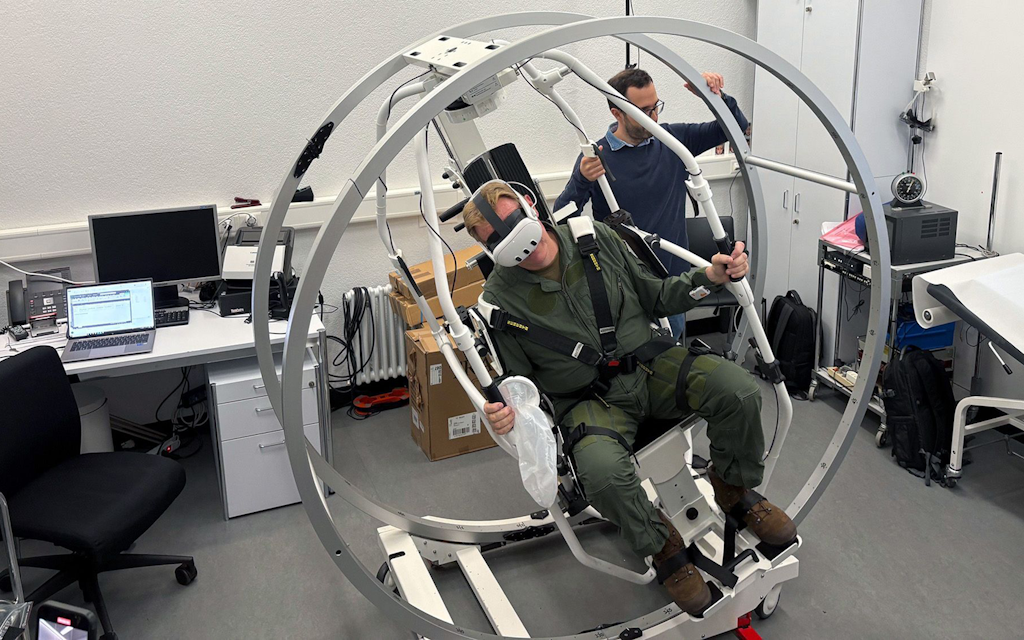
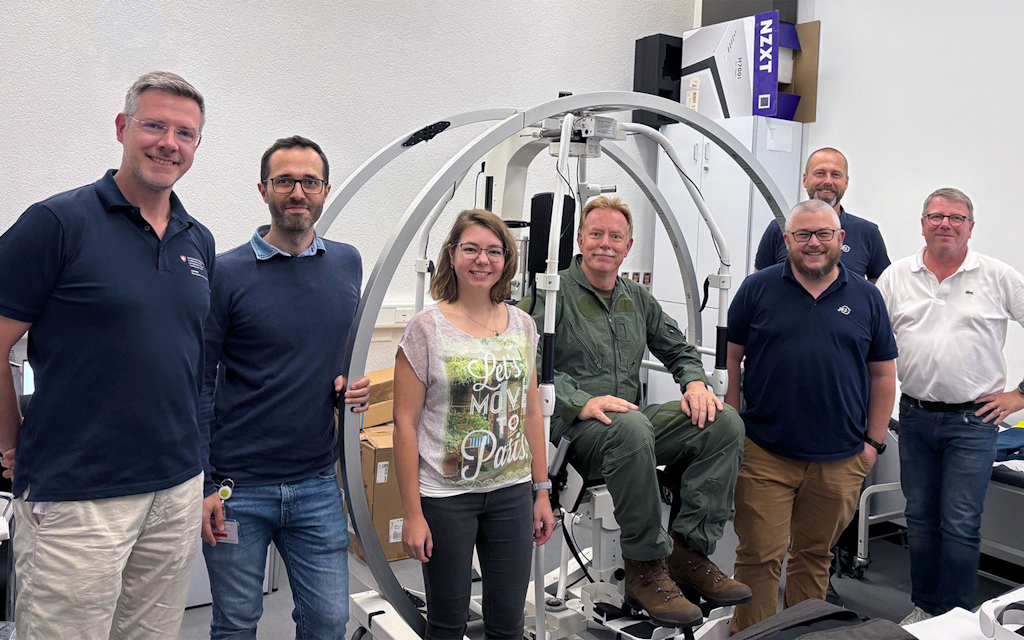
The second expedition focuses on a frequently underestimated risk – spatial disorientation – one of the main causes of aircraft-related accidents worldwide. This expedition targets the specific reactivation and stabilisation of the equilibrium organ through rotational stimuli, which cannot be simulated but only physically exposed. This rotation can lead to a problem in information processing and induce or result in spatial disorientation. By specifically reworking the vestibular input, using a virtual reality (VR)-based training system and based on a specially developed algorithm, the balance system is not only activated but systematically trained – with the goal of preventing spatial disorientation and improving sensory stability in complex aircraft attitudes. With the ROTUNDUM F35 experiment, a mobile, realistic vestibular simulation device was available for the first time, which systematically triggers vertigo, orientation disorders and other sensory misperceptions under controlled conditions.
The aim here was to prepare the pilots, within a safe training environment, for precisely those disorientation scenarios which in practice can often be life-threatening. In cooperation with the Aeromedical Centre (AMC), the device for training, research and the selection procedure will be evaluated. The first feedback shows: It is anticipated that ROTUNDUM will be able to close a critical gap in the training spectrum to date.
Conclusion and outlook
Both expeditions impressively demonstrate how new technologies can be specifically used to ensure the operative capacity and resilience of pilots – individually, based on data and adaptively. The combination of digital, physiological and sensory training methods is setting new standards in modern preparedness. Both approaches complement each other and open up novel forms of training to increase operational safety in critical flight situations.
Through continuous exchange with research, industry and the end users, these projects are contributing to ensuring that the human factor is not neglected in current technological development, and thus to assuring the long-term capability of the pilots.
Interested parties will have the opportunity, as part of the Deftech-Days from 3 September 2025 to gain deeper insights into both innovation expeditions – from the background of the expeditions to the presentation of their results.