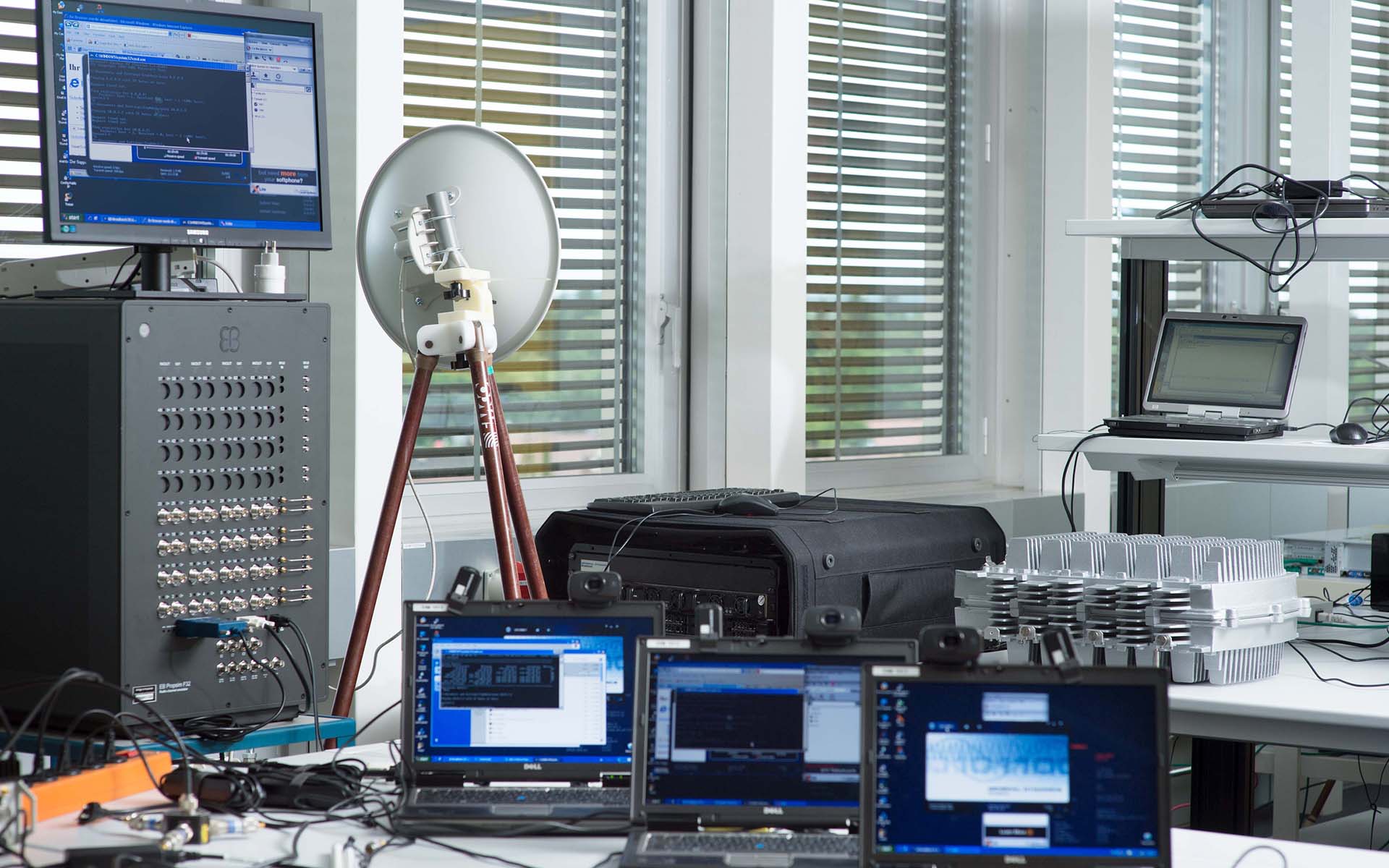
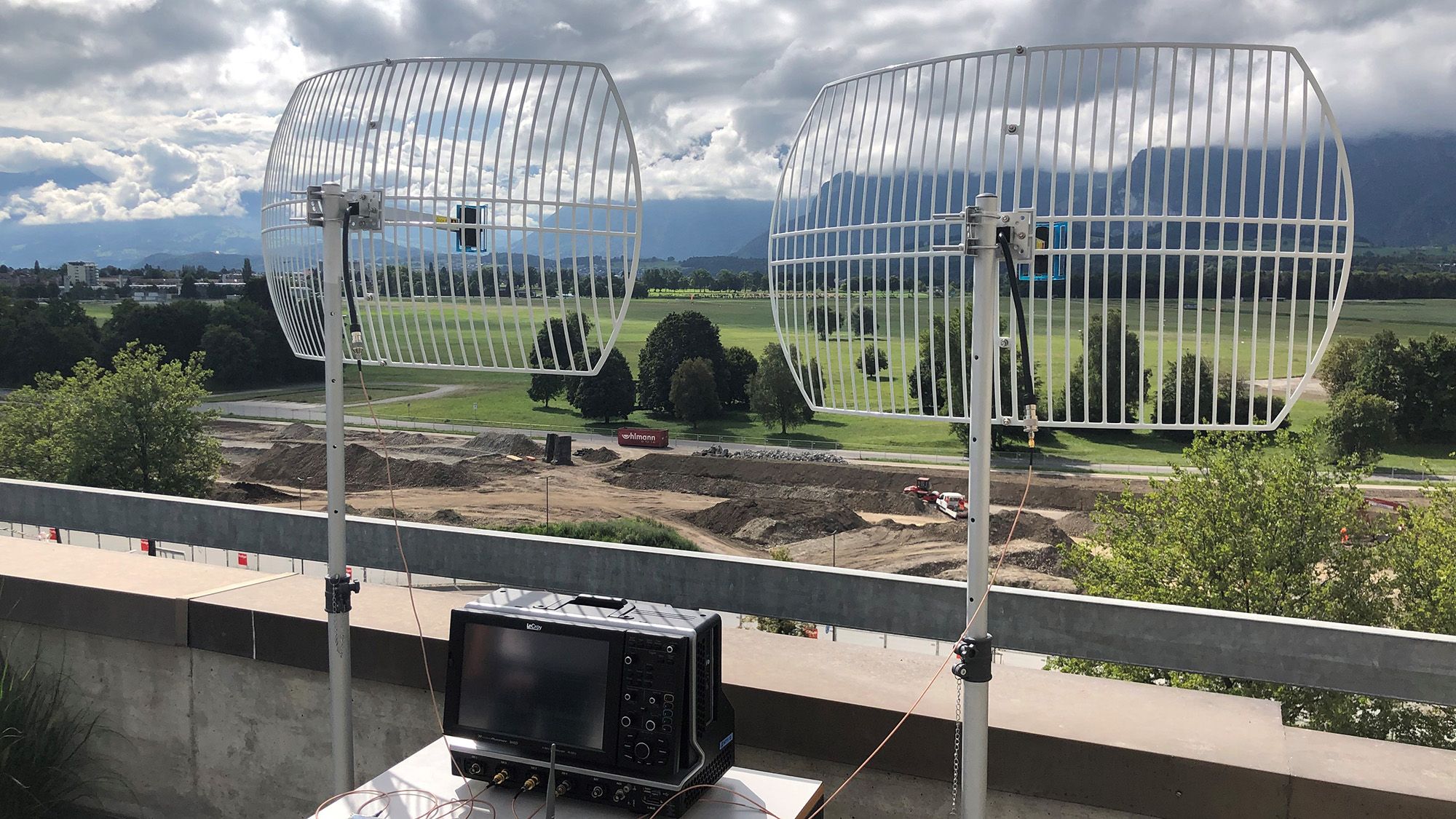
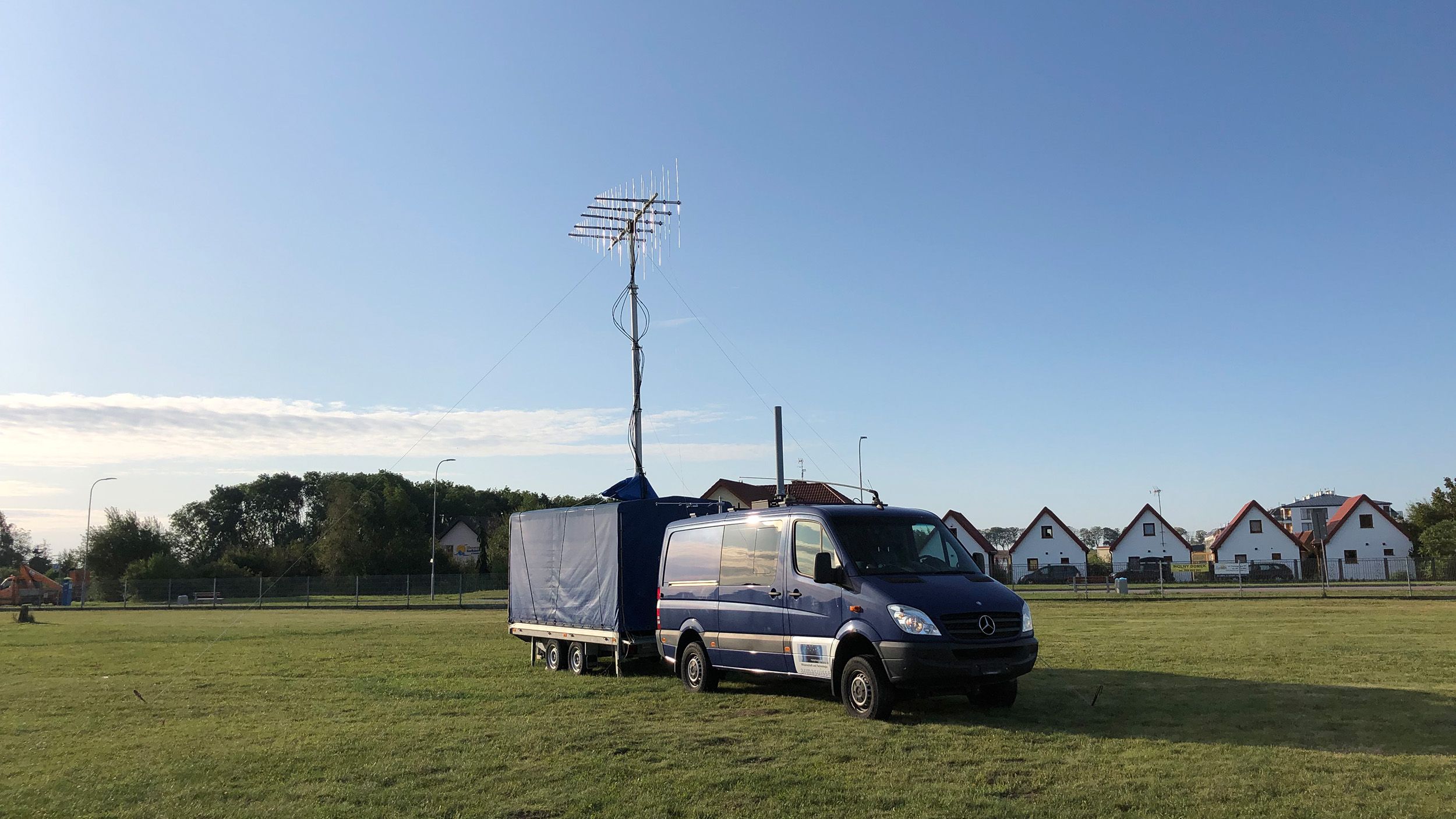
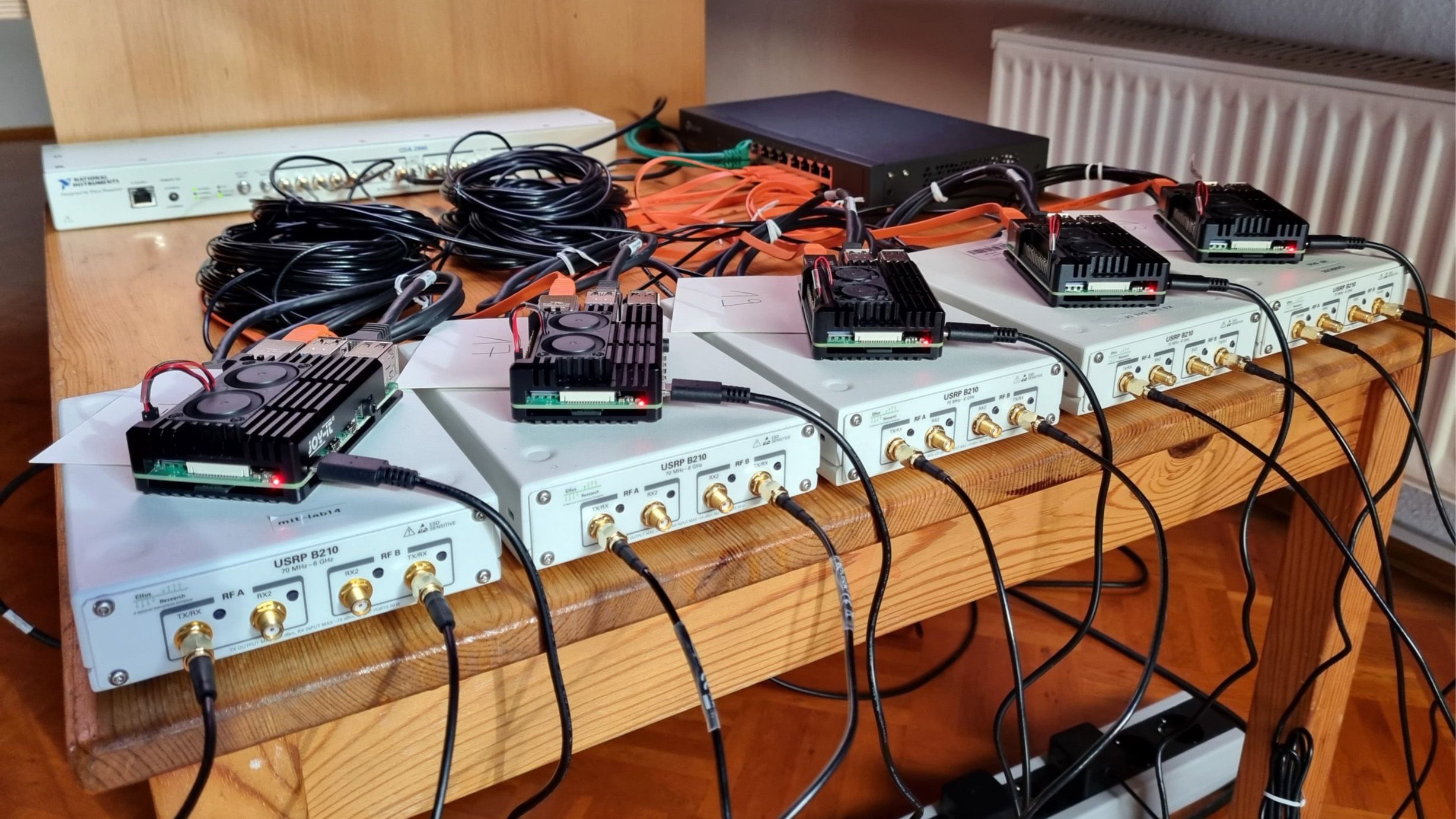
The areas of information and communications technologies are developing rapidly. The development cycles are correspondingly short and the risk thus high that technologies can become obsolete faster than they can be implemented. It is therefore essential that technologies can be observed and assessed according to their relevance and potential. The expertise required for this purpose will be built up through the Communications research programme by means of technology studies and research projects as well as field and laboratory tests with demonstrators.
Telecommunications play a key role in network-centric operations, interoperability as well as in collaborations between civilian and military bodies. Only reliable and powerful communications systems ensure that information is available immediately at the right location even under difficult conditions. This means that an information advantage can be achieved at any time, which makes decision-making much easier.
This research program focuses on developing the competences to professionally evaluate technologies for future military communications systems. A main aim is to support strategic, operational and tactical decision-making in a restrictive information environment as well as to validate conceptual approaches for future armament programmes. The activities of the research programme are loosely based on the following three competence sectors.
In essence, communication is always a transmission of information. This can take place through various different channels and with the most diverse physical resources. For communication in times and areas of crisis, wireless transmission in particular is highly valuable, as a stable infrastructure such as cables and a power supply is not always guaranteed. The focus of this competence sector is thus on wireless transmission technologies and mobile communication.
Enemy units and systems also communicate on a wireless basis, in other words, in electromagnetic space. The competence sector Electronic Warfare is therefore focusing on mastering this. This includes reconnaissance, detection, localisation and content analysis of telecommunications as well as of countermeasures such as interference or deception.
Capturing and transmitting information is not sufficient for successful operation management. Particular circumstances such as volumes of data that are too great and limited communications resources also impede comprehensive transmission. Accordingly, an interaction between the C2 and communications systems is required, to close the intelligence collection and tactical reconnaissance network successfully. The competence sector C2 Technologies covers this undertaking.
LoRa stands for Long Range and is a widely used radio protocol for Internet of Things (IoT) applications. It is characterised by a very low energy consumption and an extensive range. However, LoRa is also suitable for transmitting a time signal thanks to its signal properties. The demonstrator, developed together with the Zurich University of Applied Sciences (ZHAW), is suitable for wireless synchronisation overs several kilometres’ distance. With an accuracy of a few nanoseconds, this represents an alternative to GNSS-based time references that are susceptible to interference.
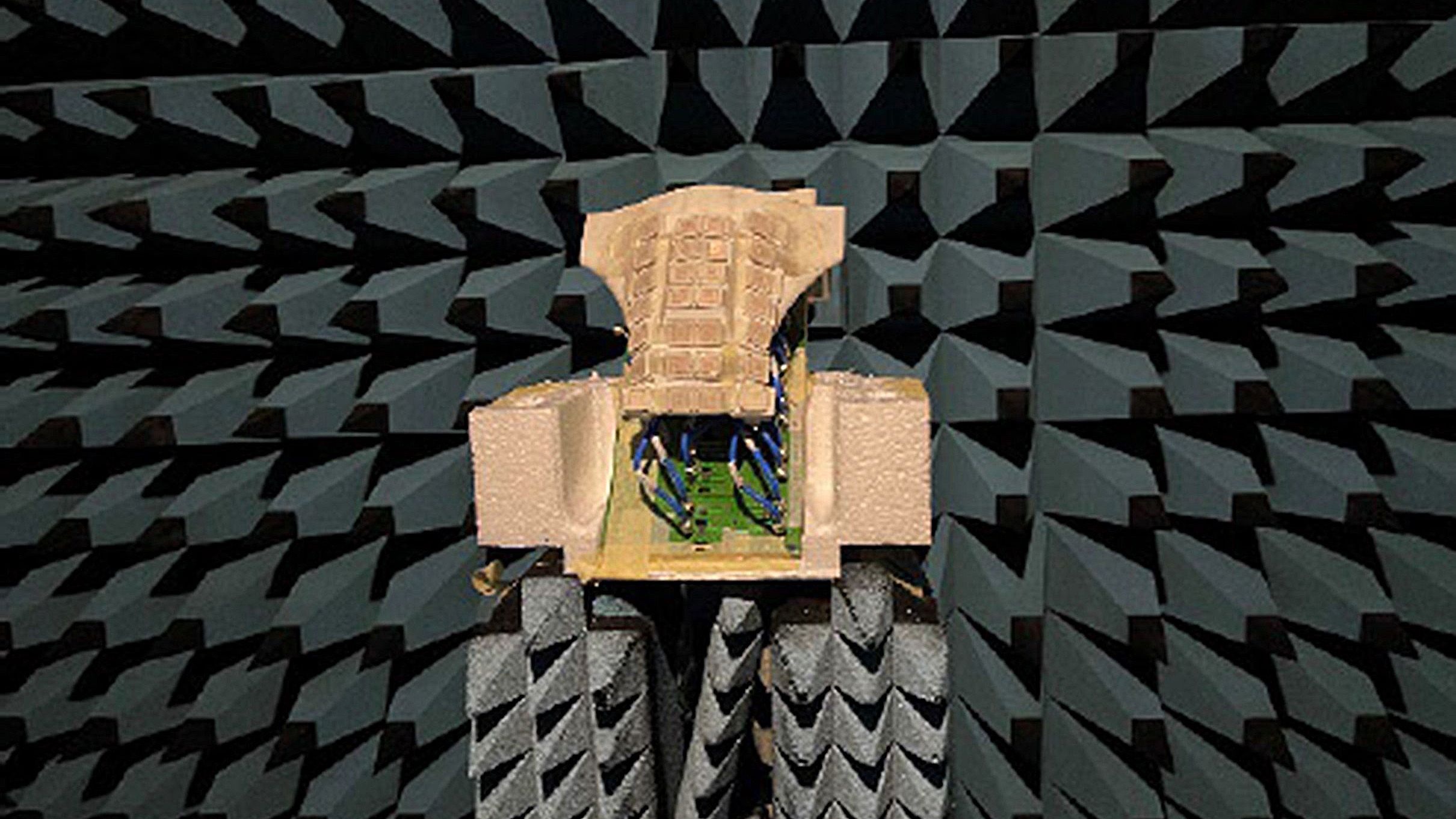
Drones are playing an ever increasing role in many areas. Most drones have wireless communications systems which connect them with the ground station. In order for drones to be able to transmit data efficiently and not to be detected by an adversary if possible, it is an advantage if the antenna can focus and swivel its beam. Specifically, this was examined in the present design study and an antenna demonstrator with antenna elements was mounted on the fuselage surface of the drone and validated
In addition to communication and time synchronisation, LoRa is also suitable for distance determination between two nodes. This project researched how precisely nodes in a LoRa network can be localised.
Conventional radar systems transmit a signal pulse and measure the time until an echo is returned from a flying object, in order to determine the distance to the flying object. A passive radar, on the other hand, uses already existing signals such as those of radio and television stations to detect aircraft. Using the developed demonstrator, skills are built to analyse the opportunities and challenges of this technology.
Mobile Ad Hoc Networks (MANET) are deployed if infrastructure-based technologies such as mobile communication systems are not available. They are hierarchy-free, which means that all participating nodes have the same capabilities and each can communicate with the others. In this communication, data packages are forwarded dynamically from the transmitting node to the addressee. Organising and finding the correct route in the network generate large overheads, which can lead to a problem in larger networks. This project demonstrates that a cooperative approach in which several nodes transmit at the same time can contribute successfully to mitigating certain problems.
Network
The development of expertise is based on a wide network of partners from the professional world, academia, universities and other research institutes in Switzerland and abroad. In order to keep track of skills and capabilities, close contact and an exchange of information is maintained with users and the planning, procurement and test centres of the DDPS.