From the sketch to the delivery: How clothing and equipment enable defence
The procurement of the Modular Clothing and Equipment System MCES is a logistical, commercial and technical masterstroke. To ensure that the process runs smoothly from the initial order to handover to the Armed forces, numerous individual parts and components must be precisely coordinated. As project manager IV, Oskar Hollenstein ensures that precisely this is achieved.
Fabio Winkelmann, Specialist area Communications, Strategic Staff
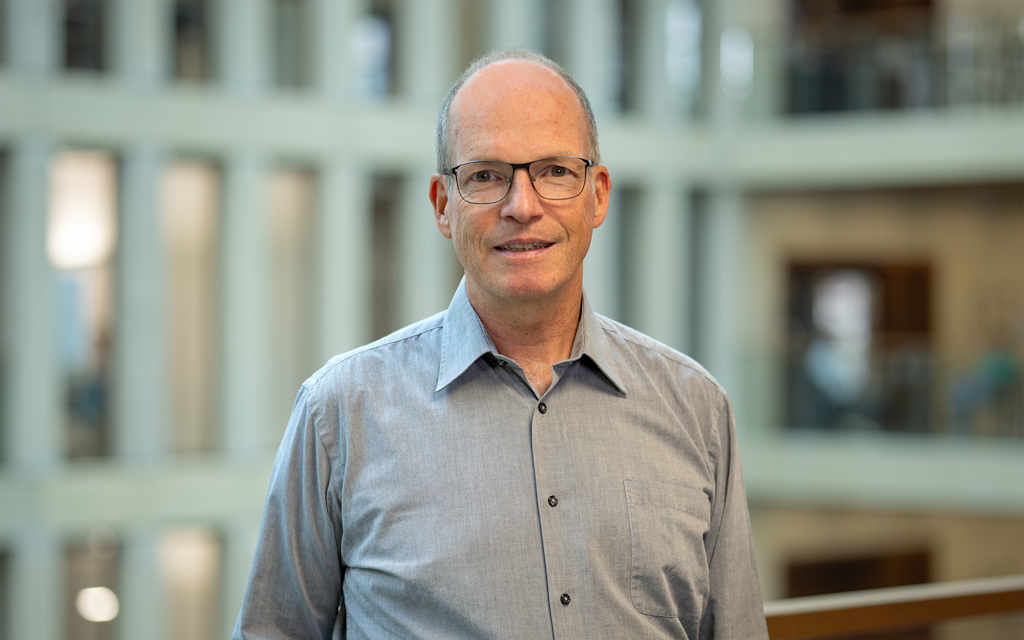
Oskar, you are project manager IV in a complex project like MCES. What exactly does that mean in your daily work?
For me, this means above all staying on top of things and tying up loose ends. MCES includes not just a large number of parts, but also covers the most diverse areas – technology, commerce, quality management and of course the logistics of armasuisse and the Armed Forces Logistics Organisation (AFLO). The project team ensures that everything works hand in hand. Because the flow of goods doesn’t end at the ramp of the AFLO, but only when the equipment is delivered to the soldiers.
The diversity of our suppliers is a real challenge.
What is the biggest challenge for you in MCES procurement? The volume, the range of parts or the tight timescale?
The diversity of our suppliers is a real challenge. Many come from the textile or equipment sectors, but their ideas of quality and adherence to schedules could hardly be more different. It’s our task to reconcile these various expectations and to enforce clear, binding standards. This requires a lot of communication and pragmatism and, in particular, patience.
How do you retain an overview of the many individual parts and the enormous quantities that are involved in the project?
That only works in a team. In the area of “Clothing and equipment”, each team member – as well as the sub-project managers – are responsible for one or more areas, either technical, commercial or in quality management. This allows each person to contribute their special knowledge, and we’re constantly exchanging ideas. Here, we’re helped by proven project management methods precisely adapted to our needs. It still remains a major challenge to run all processes simultaneously and keep them coordinated.
What was the most demanding moment in the project up to now, and how did you deal with it?
We once had a delay at short notice with important deliveries. This disrupted the entire schedule. Together with the team, we quickly set new priorities and activated alternative suppliers. This flexibility and cooperation helped us to manage the situation. Moments like these always show me how important team spirit and creativity are.
Innovation was not the main challenge in MCES. It was much more about reliability and functionality.
In your opinion, which layer of the clothing system shows particularly well how thought out the MCES concept is and why?
Innovation was not the main challenge in MCES. It was much more about reliability and functionality. However, I personally appreciate the rain protection equipment. The fabric and the manufacture combine to offer a technically superior product, both for the supplier and for us. It’s robust, versatile and exactly tailored to the requirements in operation.
If you had to explain the MCES procurement process in 30 seconds to a new team member, what would you say?
We work with proven methods which we’re continuously adapting. It’s called tailoring. Structure, clear communication and coordination are decisive.
Do you have a skill or a hobby in your private life, which always helps you in your everyday work?
I enjoy jogging. On Mondays and Wednesday, we meet up with a few colleagues in the lunch hour and go jogging. This is good not only for my body, but also gives my head new space and boosts team spirit in a completely different way.
What would you show us on a tour through your typical working day?
Our redesigned homebase on the first floor. Open spaces, modern workplaces – an atmosphere promoting creativity and cooperation.