

Endangered yellow-bellied toad on the Alpnach military airfield
Eight new spawning waters on the Alpnach military airfield are encouraging biodiversity and creating an ideal habitat for the native amphibians. These include the endangered yellow-bellied toad. Soldiers from the engineer corps are supporting preservation to maintain the habitat on a sustainable basis.
Yannick Meister, SA UNS, armasuisse Real Estate
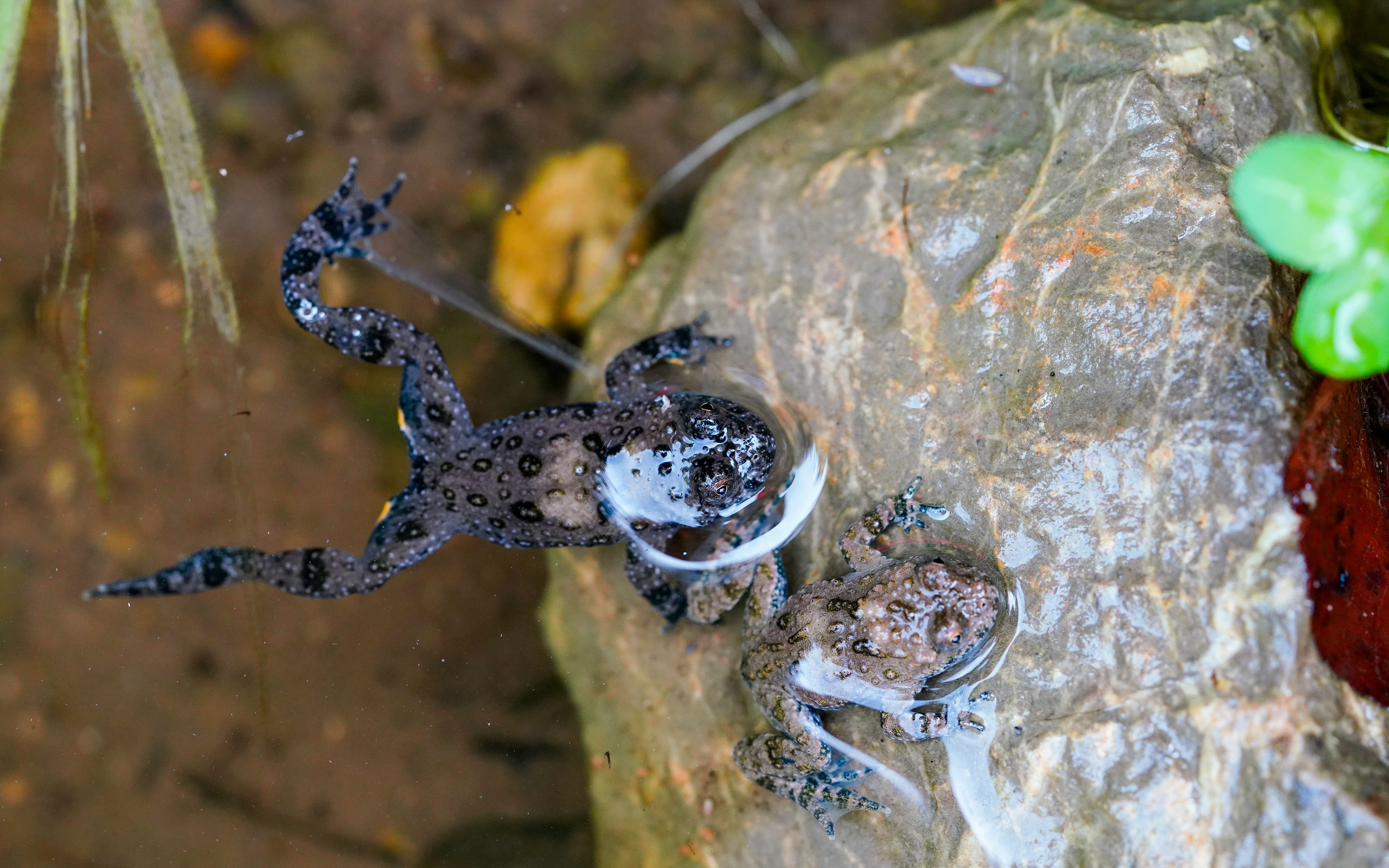
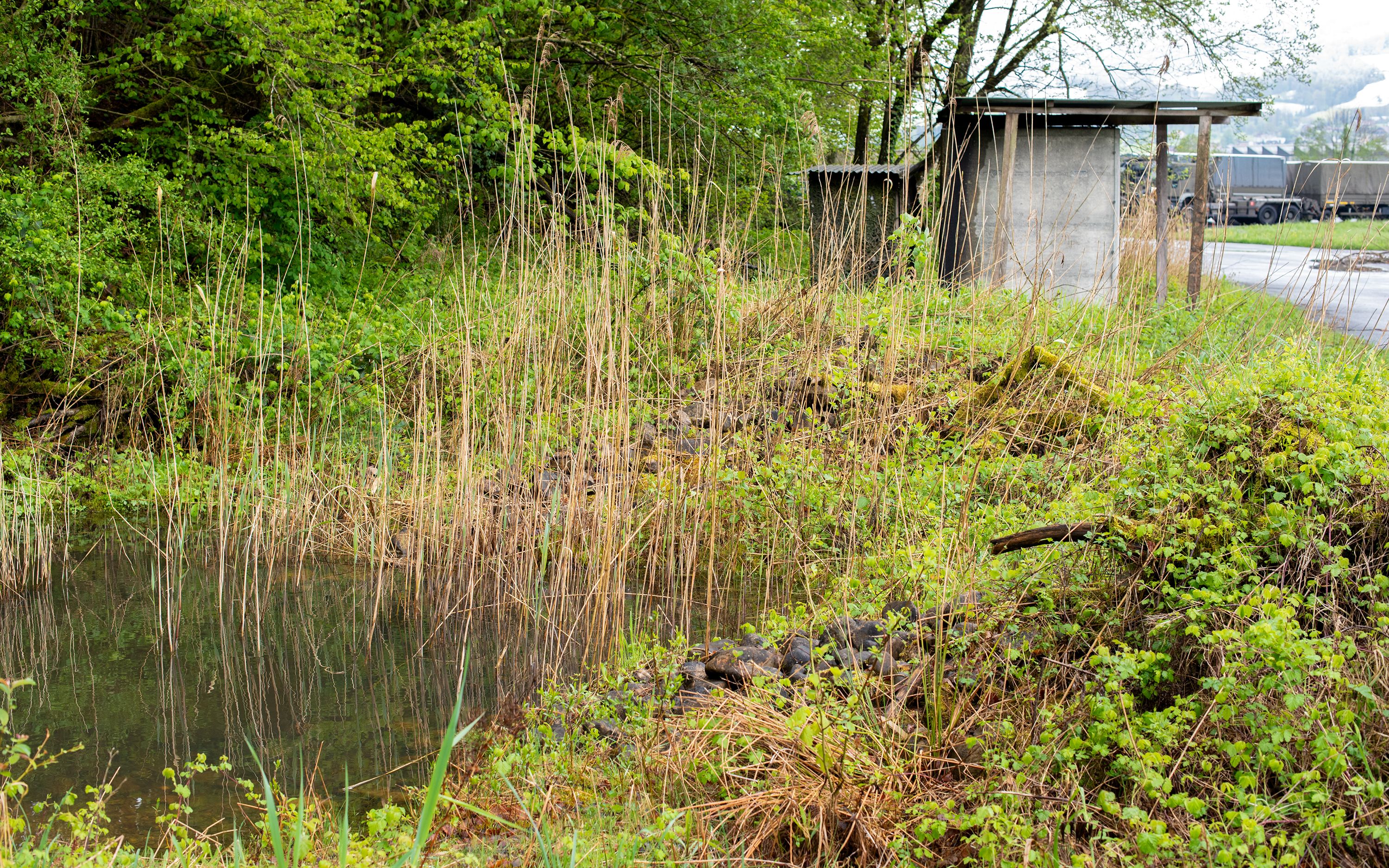
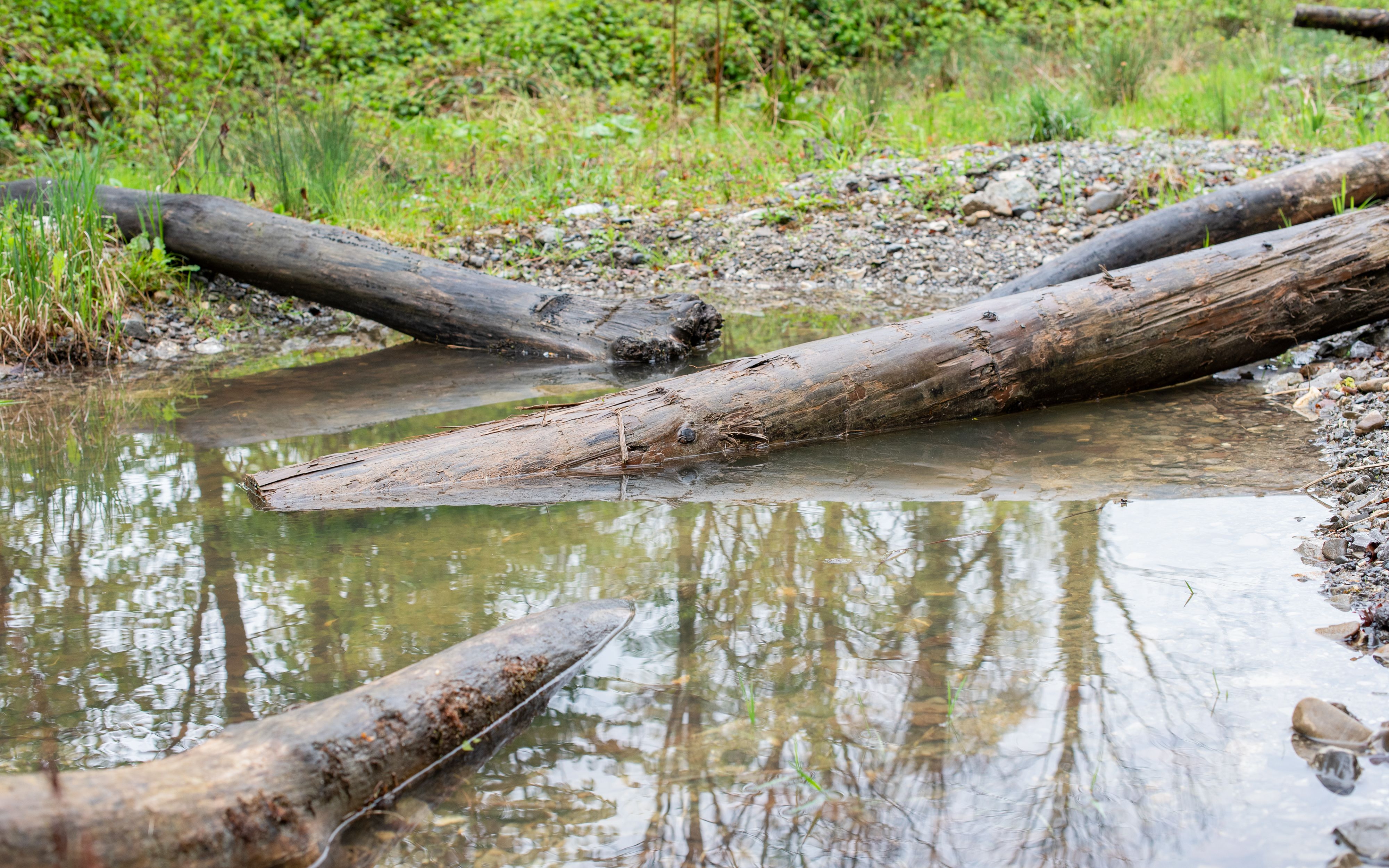
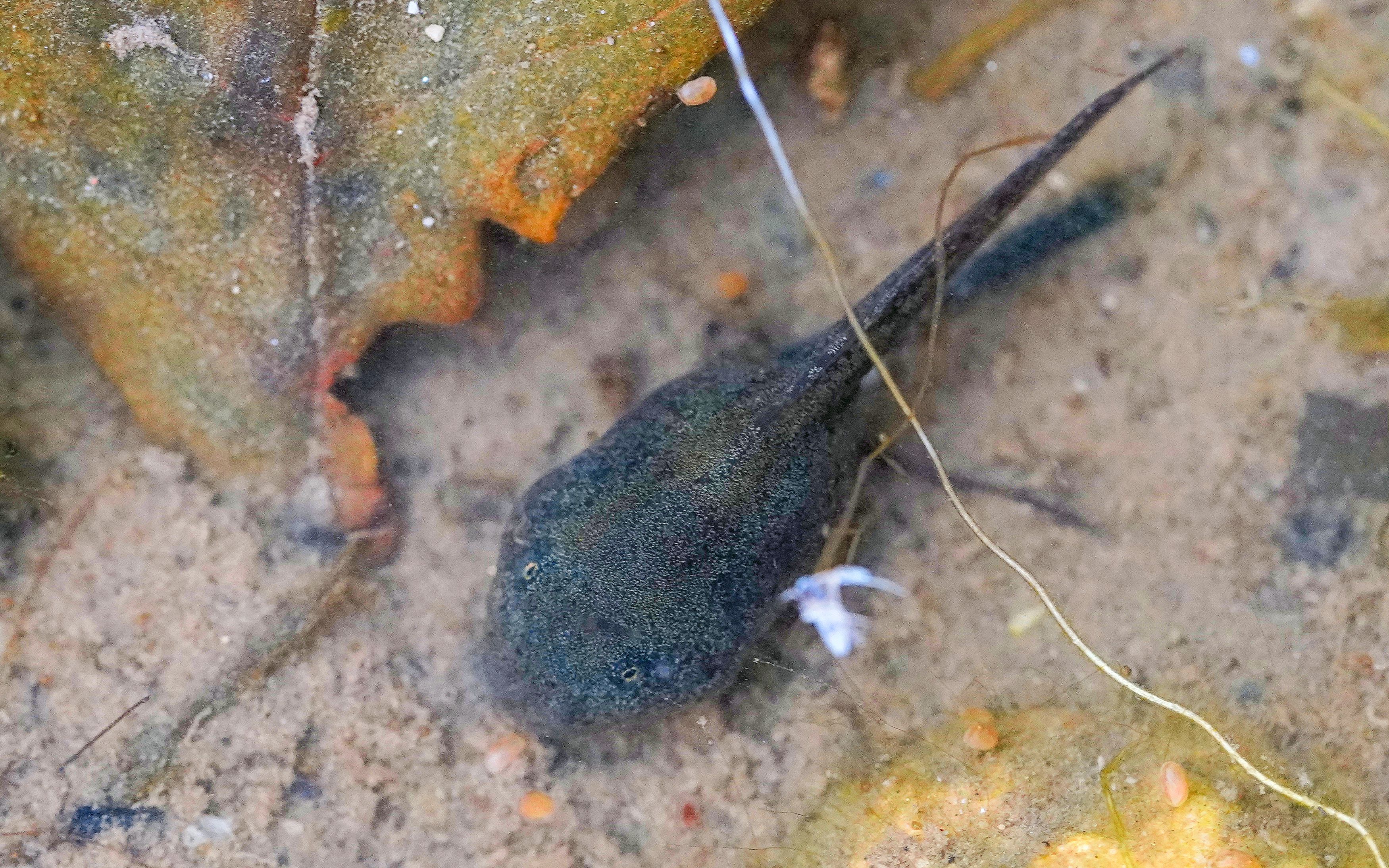
The tarns around the Alpnach airfield were overgrown with plants until just recently. The growth of plants meant that sediments of mud settled noticeably on the bank and the open water surface thus diminished. However, amphibians such as the endangered yellow-bellied toad are reliant on tarns and as a result have been seen less and less frequently at the site over the last few years. The measures to promote biodiversity were coordinated by the DDPS’ competence centre Nature and have been carried out as part of the Nature – Landscape – Armed Forces programme (NLA).
Habitat for yellow-bellied toad
To restore the natural habitat of the amphibians, the Canton of Obwalden, armasuisse Real Estate and the Armed Forces have used the embankment backfill at the south part of Lake Alpnach to create new spawning waters in parallel. These are flat tarns which dry out in winter and fill up with water again in the spring. The yellow-bellied toad and other amphibians spawn in it, as the waters are free of predators. Their young live in the tarns until they are sufficiently developed to go on to the land. Whereas there were only two spawning waters before the site was enhanced, a total of ten exist today. In addition, the newly created branch piles, cairns and rootstocks likewise offer safer opportunities for shelter.
The engineer corps provides support for cultivation
The Army Forces Logistics Organisation (AFLO) is doing most of the preservation work at the site. From summer 2024, soldiers from the engineer corps will support the AFLO. On the one hand, they will be removing neophyte and thus unwanted, non-native plants. On the other hand, they will be driving back the shrubs, thus keeping the waters open.
The Nature – Landscape – Armed Forces programme (NLA)
For 20 years the DDPS has been identifying and preserving species diversity and habitats on its sites, and encouraging them where it is reasonable to do so. This commitment pays off! As a consequence of the measures taken, habitats and species on the endangered list are found more commonly on shooting ranges, military training areas and airfields than in the rest of the country. The geodata from the NLA programme can now be found in its own map layer on the federal platform map.geo.admin.
armasuisse Real Estate
CH - 3003 Bern