

Increased efficiency of training: ISSYS app for helicopter crews
Helicopter pilots undergo comprehensive training over several years. Here, they learn how to use the ISSYS self-protection system, which warns the crew in the event of enemy radar reconnaissance and attacks with surface-to-air missiles. A tablet-based ISSYS simulator developed in the DDPS innovation spaces contributes to the digitalisation and effectiveness of this training. Find out here how a digital solution increases efficiency and saves valuable resources.
Lucas Ballerstedt, Communications Staff, armasuisse Science and Technology
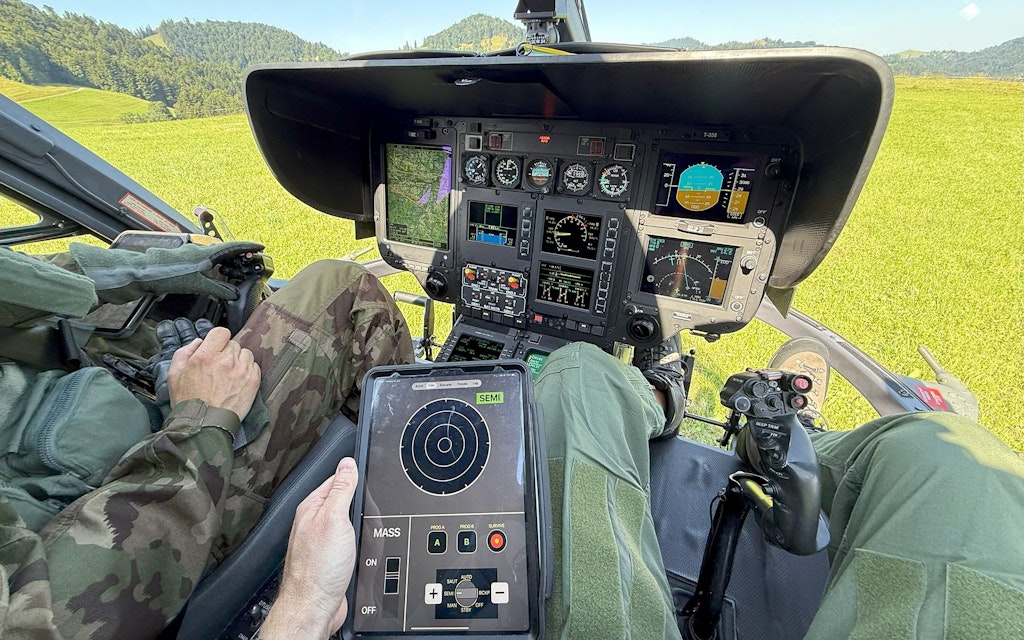
In brief:
This new solution enables more efficient and more resource-saving training of pilots. They are no longer bound to correspondingly equipped helicopters and can learn the correct handling of the ISSYS self-protection system independently of these, as well as the respective reaction, should a threat occur.
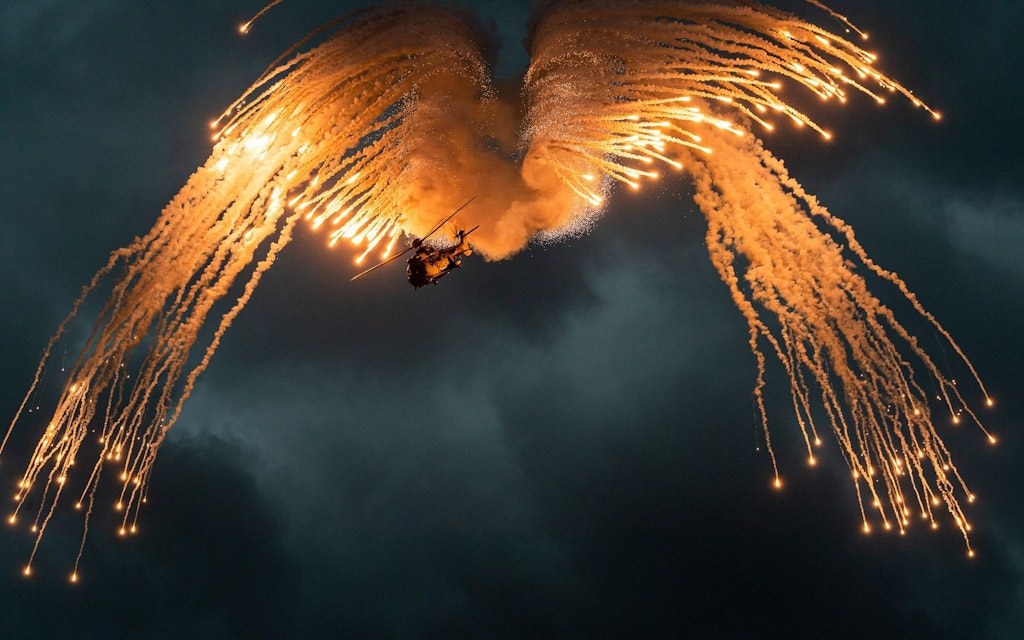
The correct reaction to threats can be essential for the survival of pilots in the event of emergency. The ISSYS self-protection system installed on military helicopters warns the crew of these threats, thus enabling timely reactions. In the first phase of tactical training, flights will take place in helicopters of type EC635, which are not equipped with a self-protection system and threats will only be simulated. Training will only take place with helicopters equipped with the ISSYS in a later phase. However, the availability of these systems is restricted, which prompts the Air Force to examine new simulation methods in order to train using the correct displays from the beginning and to compensate for the limited availability of funds.
Increase in efficiency through training app
During the basic training of pilots, instructors communicate possible threats verbally or a reaction of the ISSYS system is triggered using special devices. A tablet-based simulation tool can be used in the early training phase for intensified training on practising use of the ISSYS over a longer period of time – irrespective of the availability of helicopters equipped with ISSYS. Aspiring pilots can thus work with the ISSYS much earlier on and train more flexibly. Specifically, a flight instructor can position enemy hazards on the map in the app, such as radar systems or surface-to-air missiles. As soon as the trainees fly into the range of these systems, they are issued a corresponding warning to which they need to react. In theory, this can be in a training room, on the simulator or in practice during a training flight. This enables a new, resource-independent training method.
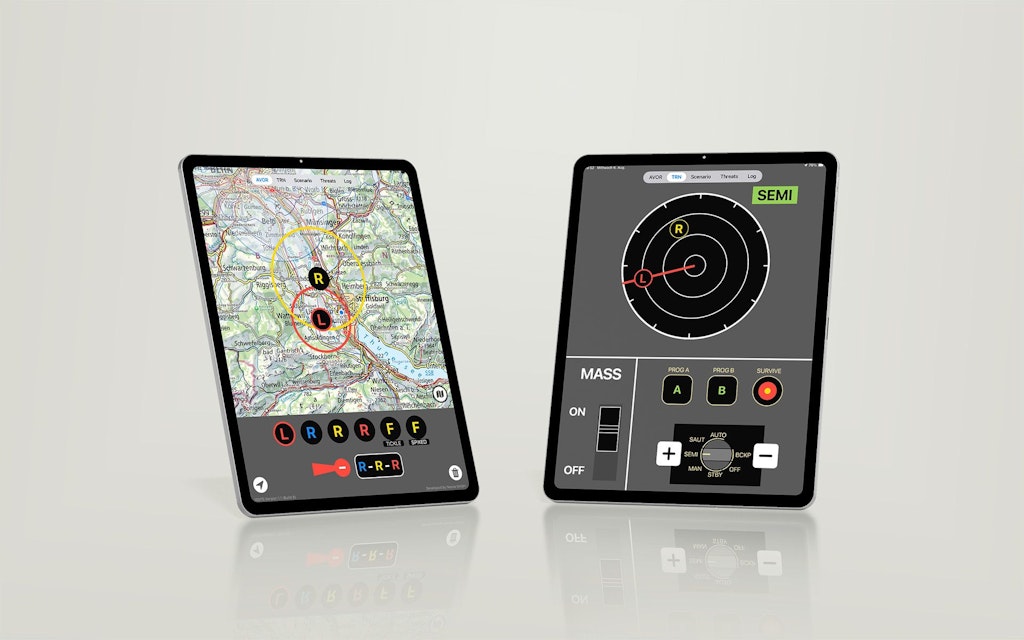
First tests show positive results
This is a cooperation between the DDPS innovation spaces, the Competence Centre for Artificial Intelligence + Simulation (KISI) of armasuisse Science and Technology, the Swiss Air Force and the company Neoos GmbH. In particular while the app was being developed, close cooperation was required between all those involved to achieve expedient results. This has been successful, as initial trials show a very positive picture. The app enables more efficient, more independent and more resource-saving training. “ISSYS on iPad has the potential of considerably improving the tactical training of military pilots and thus contributes to the focus on defence capability in the field of air transport”, says a military pilot who was already able to test the app.
The app is being continuously developed and will shortly be deployed on a test basis in basic education and training. If it proves itself, it will be rolled out to the entire pilot corps.