

Innovating together to ensure security: HEDI and DIANA
Innovations have long been a part of defence and accordingly are being increasingly promoted. Two international initiatives in the area of defence innovation are particularly worthy of mention: One is HEDI from the European Defence Agency EDA, the other is DIANA from NATO. Switzerland has already expressed its interest in participating in HEDI and would also be interested in DIANA if it were to be opened to third countries.
Anastasija Spajic, Switzerland’s Mission to the EU, armament transactions, FDFA State Secretariat
Samuel Bärtschi, Research and Innovation, armasuisse Science and Technology
Two major initiatives exist in the area of international defence innovation – the instrument HEDI from the EDA and DIANA from NATO. This article deals with Switzerland and its options with regard to these two innovation initiatives.
In 1950, the former French foreign minister Robert Schuman published his famous declaration, which is seen by many historians as the first step to European unification: «World peace cannot be safeguarded without the making of creative efforts proportionate to the dangers which threaten it». 74 years later, these dangers have changed. Today, Europe is confronted with a war at its borders. Low stock levels and production capacities underscore the need to promote the defence sector of the European Union (EU) through intensified cooperation with like-minded partners. In order to drive forward innovation in the defence area not only at national but also at international level, two initiatives have been taken in Brussels. The European Defence Agency (EDA) thus launched the Hub for European Defence Innovation (HEDI), while the North Atlantic Treaty Organization (NATO) introduced the North Atlantic Defence Innovation Accelerator (DIANA).
EDA: Strengthening the cooperative partnership through innovation projects
HEDI is an innovation hub which was set up in 2022 by the Ministers of Defence of the EDA member states. The hub consists of three pillars: identification, implementation and raising awareness of innovative ideas. In detail, the HEDI tools for implementing innovation projects are based on the following six areas:
- Developing a joint vision
- Innovation competitions
- Innovation challenges
- Proof of concept/demonstration
- Shows/exhibitions/ceremonies
- Introducing innovation
The administrative agreement between Switzerland and the EDA from 2012 forms the basis for current and potential future cooperation in the areas of research and development, training and education, skill development and joint procurements. Since 2018, the cooperation between Switzerland and the EDA has considerably intensified – Switzerland, for example, participates regularly in various working groups (such as on the topic of space) and is involved in databases and projects such as the CapTechs (Capability-Technology Groups). These are responsible for conducting research and technology activities as well as for identifying technological gaps and common fields of interest for the cooperation.
At the end of 2023, armasuisse Science and Technology also submitted an official request for Switzerland to participate in HEDI. This would open up new possibilities for the Swiss innovation ecosystem as well as its security. In exchange for a financial amount – as provided by all member states – Switzerland could profit from the points mentioned above (for example, by participating in innovation competitions), gain access to an important network, exchange ideas with other European countries and participate in innovation projects. Switzerland’s accession to HEDI would thus also be an opportunity to further emphasise the strengths of the Swiss economy. Switzerland thus took first place in the rankings of the Global Innovation Index of the World Intellectual Property Organization (WIPO) for the twelfth year in a row in 2022.
NATO: Promoting innovation through challenges
DIANA was started by NATO in June 2023 and pursues similar goals as HEDI, but with a different approach. DIANA is aimed at launching innovation needs from the working groups of NATO in what are known as challenges – which are submitted in the context of a competitive call for proposals – selecting appropriate ideas and within one year expanding them on national test infrastructures with professional guidance from mentors. A first round with three challenges has been taking place since summer 2023, in which 42 innovation projects have been included. From 2025, it is aimed to organise ten challenges each year, in which the promoted ideas should always have what is described as a dual use character (civilian and military usage). In contrast to HEDI, the commercial potential in the award and development of innovation projects also plays a role. A corresponding initiative is the NATO Innovation Fund (NIF), which aims to provide risk capital for ideas with great potential but higher development costs.
Switzerland has been a partner state of NATO as part of the Partnership for Peace (PfP) since 1996. Since then, the cooperation with NATO and its agencies has intensified. Swiss cooperation is well established. It started with Swiss participation in NATO missions (Kosovo Force, KFOR), but expanded continuously and today includes areas such as skills development and interoperability. As stipulated in the Individually Tailored Partnership Programme (ITPP) of summer 2023, the aim is to focus on reinforcing Swiss defence capability in future and strengthening cooperation with NATO. The innovation area of NATO is not yet open for Switzerland – the instruments DIANA and NIF are currently not accessible for third countries. Nevertheless, Swiss participation in the future will be closely scrutinised if the instrument is opened for partner states.
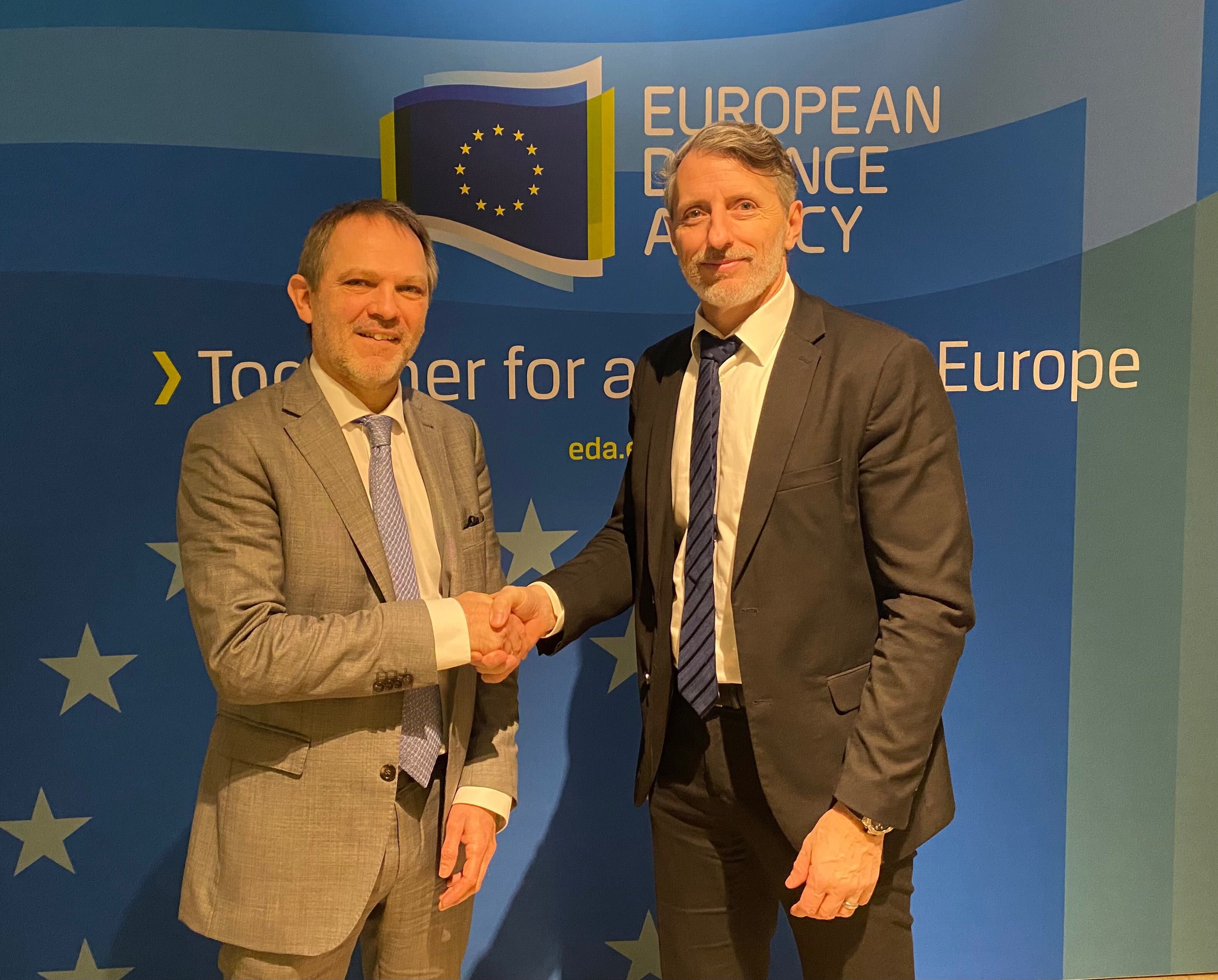
Innovation for Switzerland – now and in the future (admin.ch)
Partnership for Peace: Switzerland and NATO set cooperation targets for 2023 and 2024 (admin.ch)