

ARCHE 2024 – research demonstrators for future disaster relief
ARCHE stands for Advanced Robotic Capabilities for Hazardous Environments. This event took place for the seventh time between 1 and 5 July 2024 and for the second time in the military training village in Epeisses, near Avully. In contrast to the first ARCHE event - in 2018 - the number of researchers increased from 40 to 180.
Sarah Trösch, Staff, competence sector Science and Technology
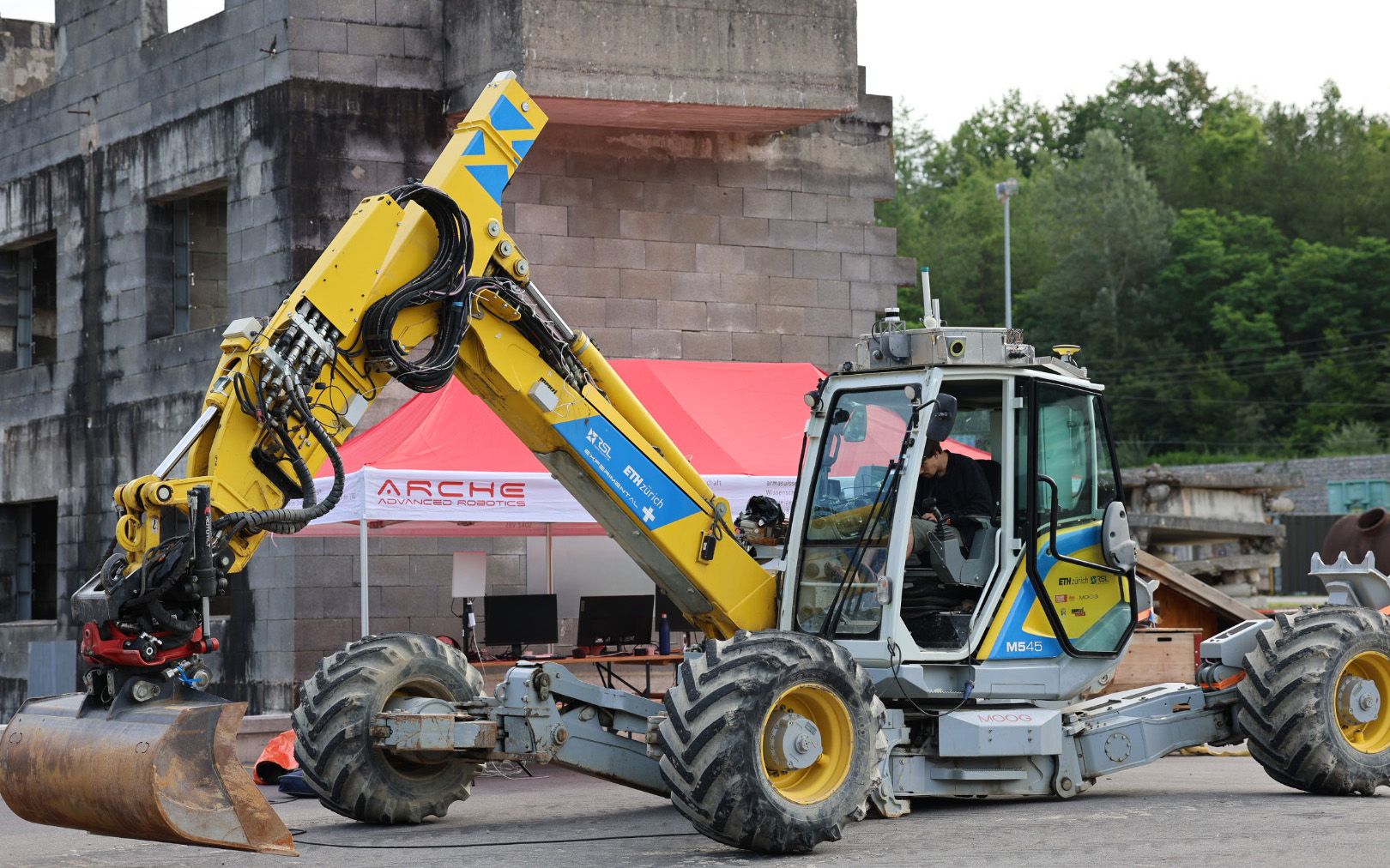
Under the direction of the Swiss Drone and Robotics Centre (SDRC), part of armasuisse Science and Technology (S+T) and in cooperation with the Engineer/Rescue/NBC Training Unit (LVb G/Rttg/ABC) and ETH Zurich, those taking part in ARCHE are testing the practical suitability of current Swiss robotic and drone systems for supporting the Armed Forces and other authorities with safety-related tasks as part of disaster relief.
ARCHE offers researchers the opportunity, sometimes for the first time, to test their research demonstrators for disaster protection in a realistic terrain. Up to now, these systems have for the most part been tested in laboratories. In the field, researchers can now recognise what works well but also where their demonstrators show a need for improvement or where they need to be more robust, as well as which tools are required in the terrain to be able to react more quickly to system problems. ARCHE brings the disaster protection research community together and also enables participants to establish a connection to the consumer – in other words, the Swiss Armed Forces and other authorities with security-related tasks.
The mutual exchange between the researchers and the consumers results in a win-win situation for those involved – on the one hand, the consumer can show the researchers what they need, what they find interesting and where they have difficulties in their safety-relevant tasks. On the other hand, the consumer obtains realistic insights into research and thus gains knowledge on how far advanced the systems are as well as on the degree of technical maturity of the state of the art.
Some of the research demonstrators which were tested for the first time at the ARCHE by their respective developers in the field will be presented below.
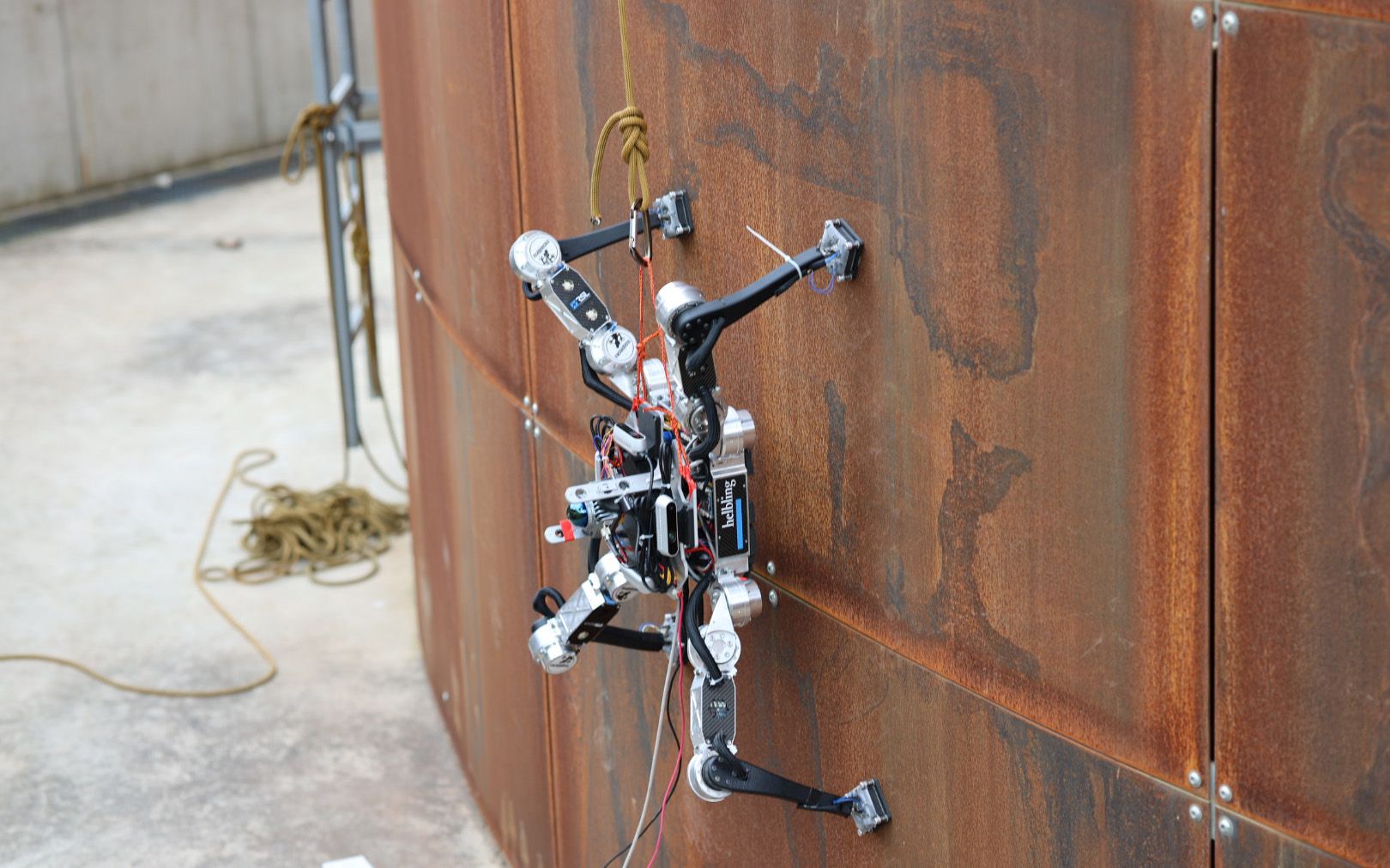
Magnecko – a climbing robot with magnetic feet
The climbing robot Magnecko is to be used in future for inspections on ships’ sides, bridges and steel girders. Magnecko can find out whether the respective structure exhibits cracks or rust or whether a screw is loose. The robot is thus used in particular for prevention. Its task is to find errors in the infrastructure before a major catastrophe occurs. It is being developed by a team of students at ETH Zurich.
What is special about Magnecko is that the magnets integrated in the robot remain switched on even without electricity. That means that the robot continues to function even in the event of a power failure. Magnecko was tested for the first time in a real environment. In the next step, it is aimed to implement a second prototype, with improvements based on the accumulated findings in the trials at the ARCHE.
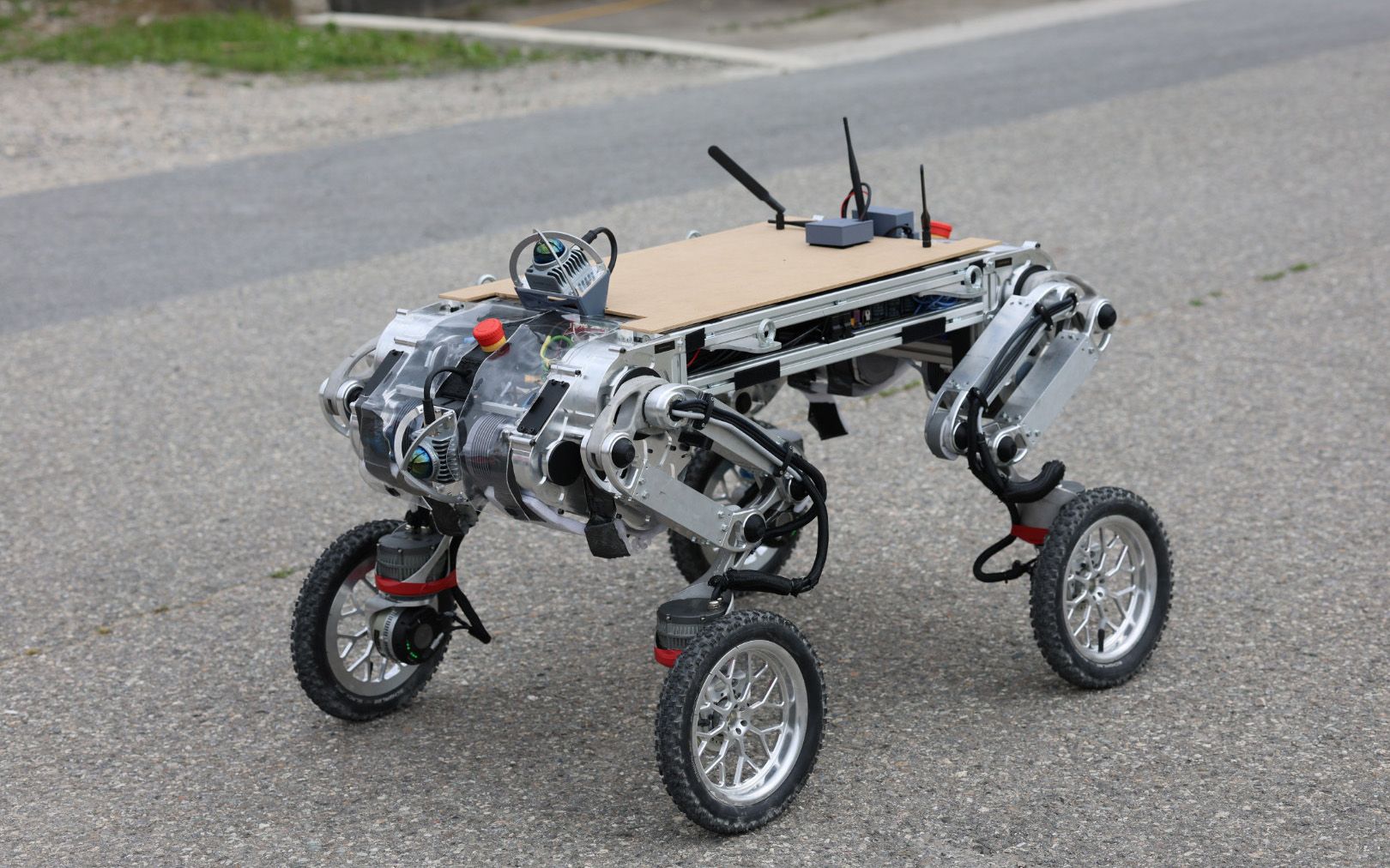
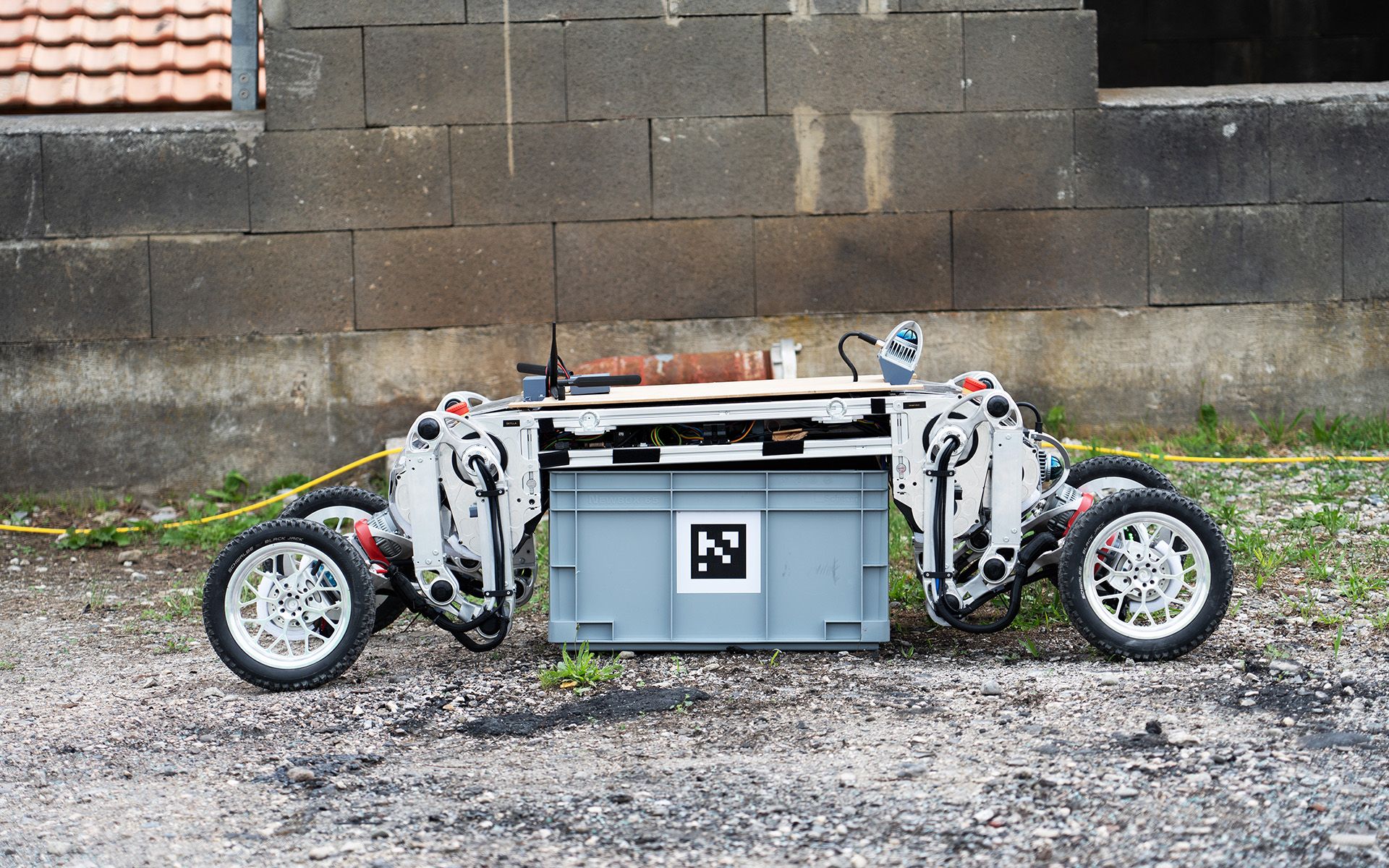
The load-lifting robot Leva
Leva, likewise a student project of ETH Zurich, is a robot that can lift loads. Leva is specialised in lifting Euro boxes used, for example, by the Armed Forces, from the ground by itself and transporting them - up to a weight of 85 kilograms. It can thus help persons to carry loads, particularly in the logistics sector. Leva can even climb stairs at the same time. For example, Leva will be able to transport material for first aid or recovery equipment in future. In the next step, the robot should be able to move more autonomously and load the boxes by itself.
Aithon – a drone with suction pads for bridge inspection
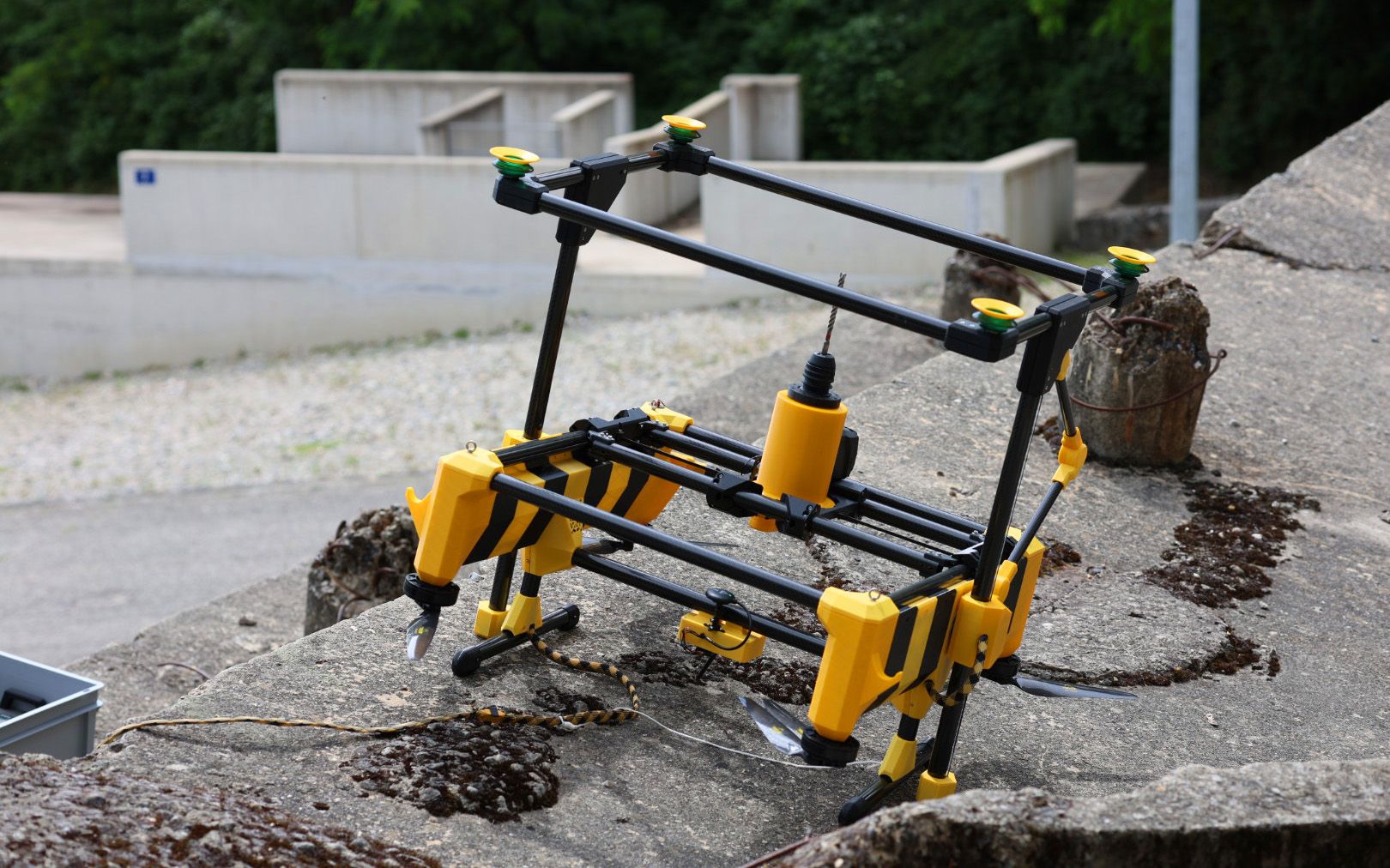
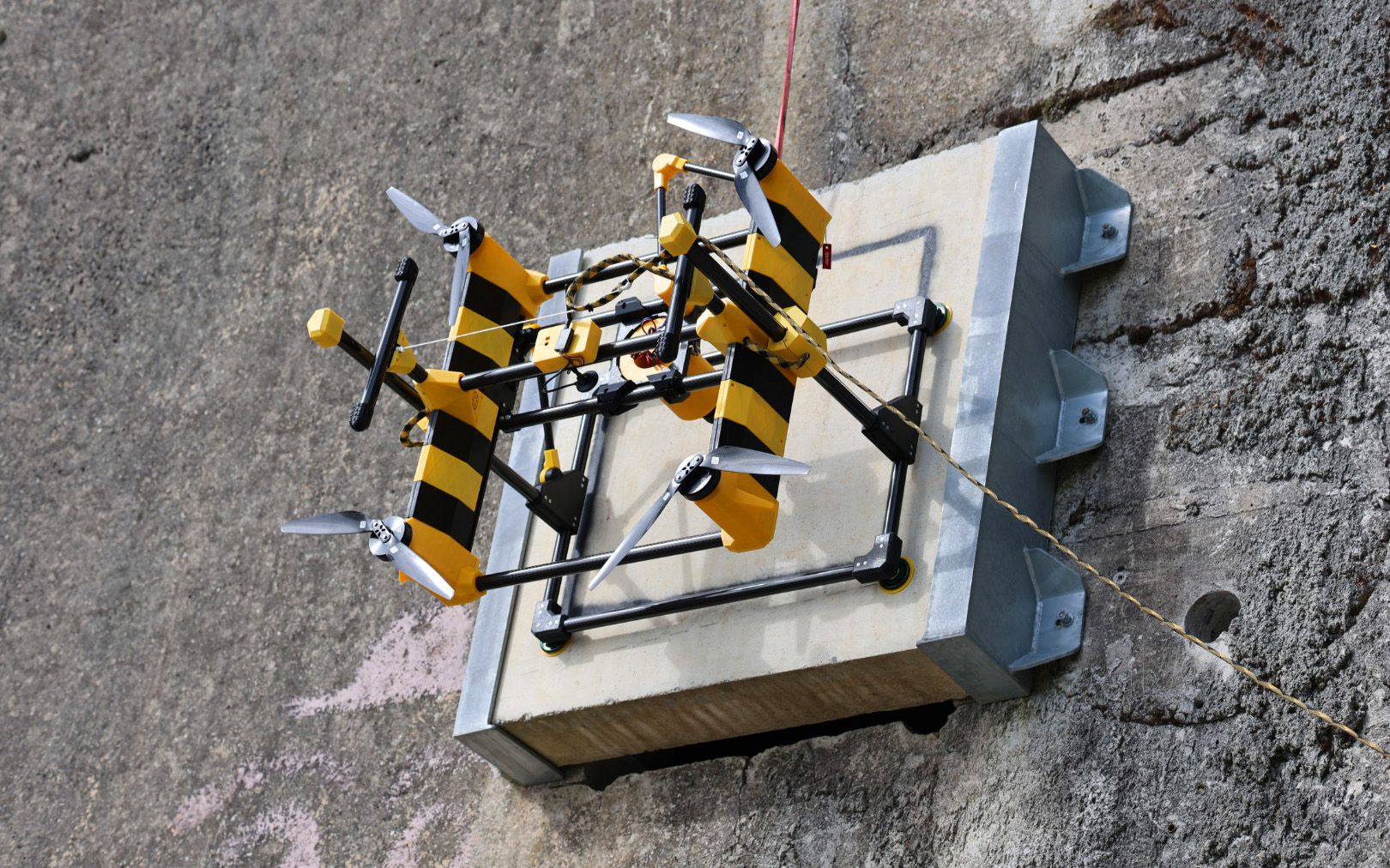
The drone called Aithon, developed by a team from ETH Zurich, aims to revolutionise the building industry in future. In flight, a drone is not able to precisely detect cracks in bridges, for example, due to the movement of the drone. A drone is thus needed which can attach itself to the actual structure. With this in mind, the researchers from Aithon Robotics have developed a drone with suction pads. This also enables tools to be used with the drone precisely and at a height.
A radar that can check whether there is moisture in concrete and a conventional drill that can drill holes for installations, to fit a sensor, for example, that can measure oscillations while a vehicle is driving over a bridge are examples of such sensors. A core drill can also be used in rescue operations to guarantee access in rubble for inspection robots and crash crews. It can also serve to extract rock samples.
It is planned to deploy the drone for various inspections of structures – such as dam walls and tunnels, in addition to bridges. Thanks to the drone, it will now be possible to inspect older building structures safely. This would enable preventive improvements to be carried out, which would ensure more safety and prevent the complete closure of building structures.
FLIFO and boarAI
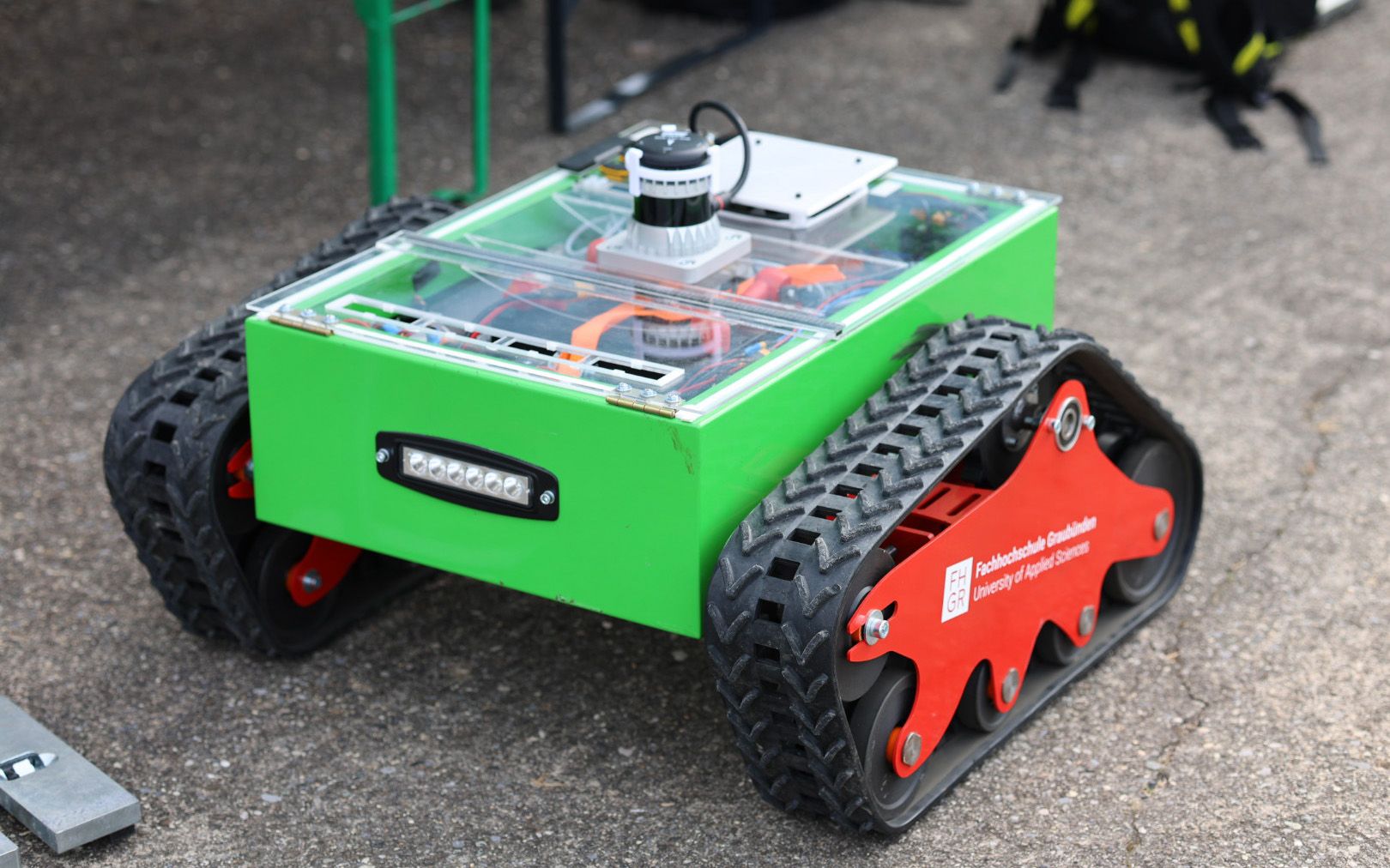
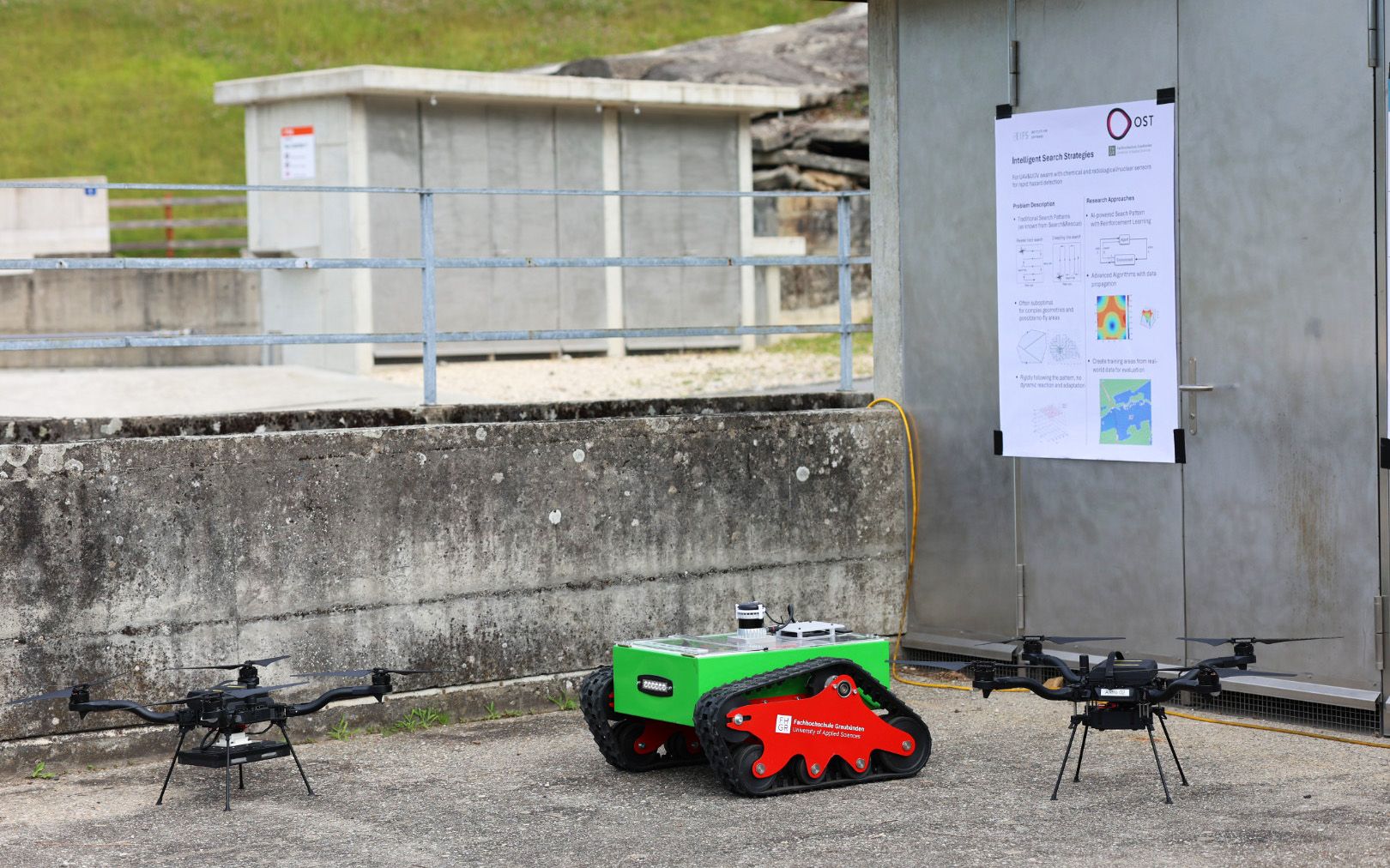
The joint project of the University of Applied Sciences of the Grisons and the Eastern Switzerland University of Applied Sciences is a robot called boarAI, which helps to identify toxic substances in a building. The robot can move autonomously using GPS waypoints and has a Lidar sensor. Thanks to this, it can avoid obstacles. In addition, sensors for identifying hazardous substances are also located on board the robot. For example, sensors to identify nuclear radiation or sensors to detect gaseous rays, in other words, toxic substances.
A hazardous substances card can be seen on the researchers’ computer, from data which the boarIA and the two drones equipped with the same sensors are transmitting.
The next step in the development envisages developing an intelligent search strategy by means of AI algorithms so that the drones and the robot can investigate an area autonomously. The source of danger could thus be found even quicker.
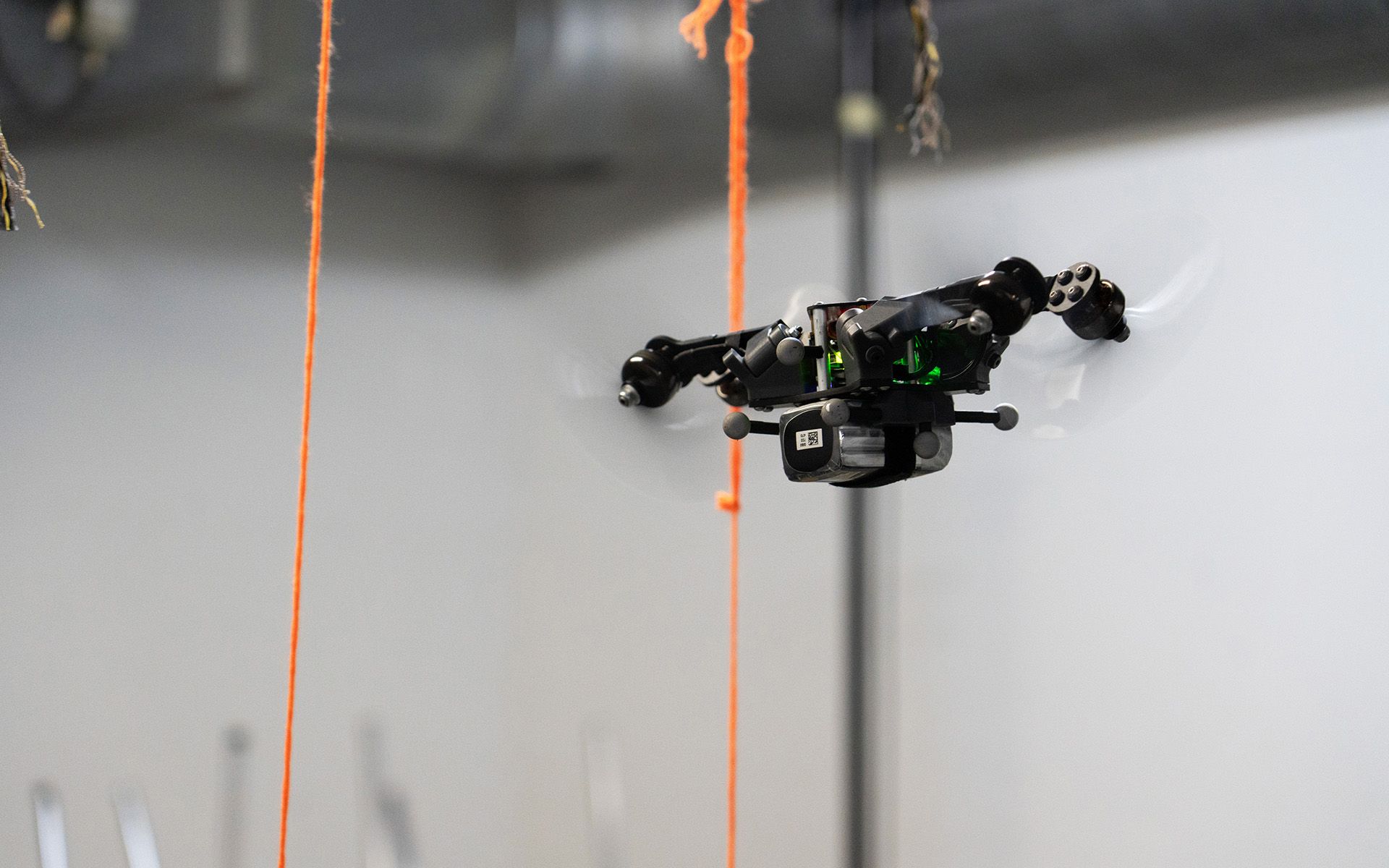
Another FHGR project is called FLIFO and is a drone which was also to be found for the first time at the ARCHE this year. This development, however, harbours the following problem – the larger the propellers of a drone, the more efficient it is. But then it no longer fits through small gaps or windows. The FLIFO drone solves this problem. What is special about this drone is that it can change its shape – it folds up its arms. Although this renders it inefficient for a brief moment, it is then only half as big as when it is folded out. In future, drones could thus fly into buried buildings and help to locate persons.
Until the next ARCHE
armasuisse Science and Technology would like to express its thanks for the fascinating ARCHE 2024 and is looking forward to the next event in 2025.